
Des Moines' High Water Table:
What Every Homeowner Should Know
Why your basement floods every spring, what's actually happening underground, and how to fix it permanently.
It's Not Random. It's Your Water Table.
Every spring, Des Moines homeowners discover the same thing: their sump pump running non-stop, water seeping through basement floor cracks, and that unmistakable damp smell creeping into their living space. Most assume it is a one-time event or blame it on unusually heavy rain. It is not random. It is your water table rising.
Central Iowa sits on some of the poorest-draining soil in the Midwest — a legacy of the glaciers that carved this landscape 12,000 years ago. The glacial till beneath your home traps water like a sponge, and every spring, snowmelt and rainfall push that trapped groundwater upward, sometimes to within inches of your basement floor. Understanding what is happening underground is the first step toward a dry basement and a stable foundation.
This guide explains the geology beneath Des Moines, how the water table damages your home, why it follows a predictable seasonal cycle, and what you can do about it. If you are tired of mopping your basement every March, read on.
What's Happening Beneath Your Home
This cross-section shows the soil layers, your basement foundation, and the seasonal water table fluctuation that drives basement flooding in the Des Moines metro.
What Is a Water Table?
The water table is the upper boundary of the zone where soil and rock are fully saturated with groundwater. Everything below the water table is waterlogged. Everything above it is not — at least most of the time.
In the Des Moines metro, the water table typically sits 4 to 10 feet below the surface. That range matters because most residential basements extend 7 to 8 feet below grade. During dry periods in late summer and fall, the water table drops safely below your basement floor. But during spring snowmelt and heavy rain events, it can rise to within 2 to 3 feet of the surface — well above your basement floor level.
When the water table rises above the bottom of your basement, groundwater pushes against your foundation walls and floor with immense force. This is called hydrostatic pressure, and it is the primary cause of basement flooding in Polk County, Dallas County, and Story County. It does not matter how well your basement was built — water under pressure will find a way in.
Des Moines' Unique Geology
The soil beneath Des Moines was not deposited by rivers or wind alone. It was left behind by glaciers. Around 12,000 years ago, the Des Moines Lobe of the Wisconsinan glaciation pushed south into central Iowa, grinding bedrock into a dense mixture of clay, silt, sand, and gravel called glacial till. When the ice retreated, it left this material behind — sometimes 50 to 100 feet thick across central Iowa.
Glacial till is a terrible drainage material. The clay particles are so fine that they pack together tightly, leaving almost no space for water to flow through. When rain or snowmelt soaks into the ground, it does not drain away. It pools, saturates, and builds up pressure. Unlike sandy soils in other parts of the country that let water percolate freely to deep aquifers, Iowa's glacial till traps water near the surface — exactly where your home's foundation sits.
On top of the glacial till sits a layer of loess — fine-grained, wind-blown silt deposited over thousands of years. Loess is the fertile topsoil that makes Iowa farmland so productive, but it has its own problems for homeowners. When loess gets wet, it compacts and loses volume. When it dries, it shrinks and cracks. This wet-dry cycling creates voids and channels near the surface that funnel water directly toward your foundation walls.
How High Water Tables Damage Homes
A rising water table does not just cause puddles in your basement. It creates a cascade of structural and health problems that worsen with every seasonal cycle. Here is what is actually happening to your home:
Hydrostatic Pressure
When groundwater rises above your basement floor level, it exerts pressure against your foundation walls and floor slab from the outside. Water weighs 62 pounds per cubic foot. A fully saturated water table pressing against an 8-foot basement wall can exert thousands of pounds of lateral pressure per linear foot. Concrete is strong in compression but weak in tension — this pressure can bow walls inward, crack them, and eventually cause structural failure if left unaddressed.
Cove Joint Seepage
The cove joint — where your basement wall meets the floor slab — is the most common entry point for water. The wall and floor are poured separately and are not bonded together. When hydrostatic pressure builds, water is forced upward through this joint, often appearing as a line of water or dampness along the base of your walls. In Des Moines homes, this is the number one source of basement water intrusion.
Floor Cracks and Heaving
Sustained upward pressure from groundwater can crack your basement floor slab and, in severe cases, cause sections of the floor to heave upward. These cracks widen and contract with seasonal water table fluctuations, and each cycle allows more water in. What starts as a hairline crack becomes a reliable leak within a few years.
Efflorescence and Mineral Deposits
Those white, chalky deposits on your basement walls are called efflorescence. They are mineral salts left behind when water passes through your concrete walls and evaporates on the interior surface. Efflorescence itself is not harmful, but it is a clear indicator that water is moving through your foundation — and where water goes, structural damage follows.
Foundation Settling
Saturated glacial till loses its load-bearing capacity. Your home's foundation was designed to rest on soil that supports a specific weight. When that soil becomes waterlogged, it compresses unevenly, causing differential settling — one section of your foundation sinks more than another. The result is cracked walls, sticking doors, sloping floors, and gaps around windows and door frames.
Mold and Air Quality
A perpetually damp basement creates the ideal environment for mold growth. Mold spores become airborne and — through the stack effect — are drawn upward into your living space. Research shows that up to 50% of the air you breathe on the first floor of your home originated in your basement or crawlspace. A wet basement is not just a basement problem. It is a whole-house health problem.
The Spring Flooding Cycle
Basement flooding in Des Moines follows a predictable annual pattern driven by Iowa's freeze-thaw cycle. Understanding it helps you anticipate problems and take action before the water arrives.
December through February: The ground freezes to depths of 3 to 4 feet across central Iowa. The frozen layer acts as an impermeable cap, preventing surface water from draining downward. Meanwhile, any moisture already in the soil below the frost line remains trapped.
March through April: Temperatures rise and snow begins to melt. Snowmelt cannot percolate through the still-frozen deeper soil layers, so it flows laterally along the surface and into any gap, crack, or opening around your foundation. Simultaneously, as the frost line recedes from the top down, the water table begins rising from below. Your basement gets hit from both directions at once — surface water infiltrating from above and hydrostatic pressure building from below.
May through June: Spring rains compound the problem. Iowa averages 4 to 5 inches of rainfall in May. The ground, already saturated from snowmelt, cannot absorb more. The water table peaks, sump pumps run continuously, and basements that held all winter begin to flood. This is when most Des Moines homeowners finally call for help.
July through November: Evaporation and plant uptake draw moisture from the soil. The water table drops. Basements dry out. Homeowners forget — until next spring, when the cycle repeats. Each cycle causes a little more damage than the last.
Protecting Your Des Moines Home
You cannot lower the water table. But you can manage the water before it enters your basement and redirect it away from your foundation. Here is what actually works in central Iowa's soil conditions:
Interior Drain Tile System
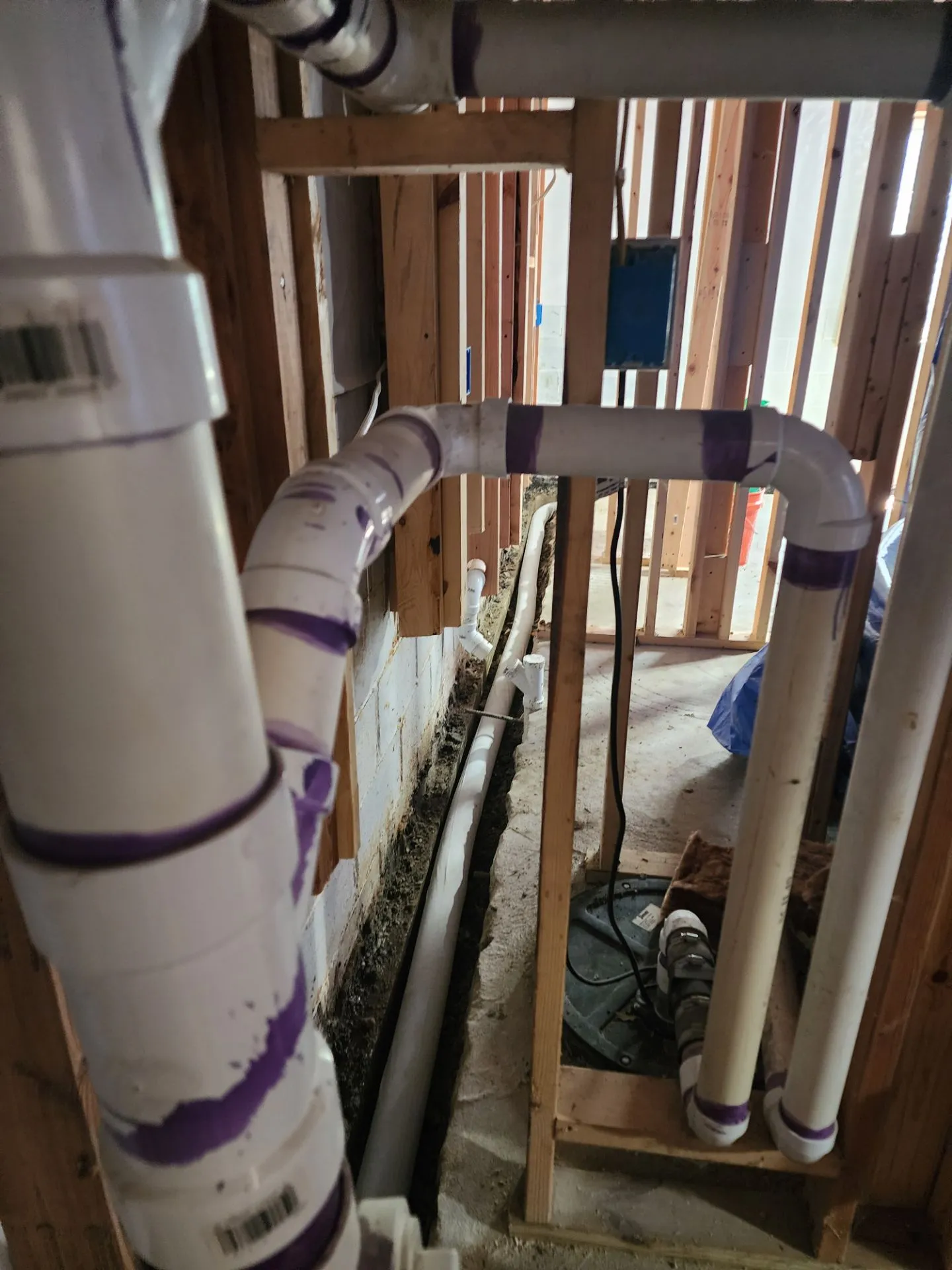
The single most effective defense against a high water table. A perforated drain pipe is installed in a trench along the interior perimeter of your basement footing, covered with clean gravel, and routed to a sump basin. Water that reaches your footing is collected before it enters your basement. This is the foundation of every waterproofing system we install in Des Moines. Learn more about our waterproofing systems.
Sump Pump with Battery Backup
The drain tile system routes water to a sump basin, and a pump discharges it away from your home. In Des Moines, where power outages during spring thunderstorms are common, a battery backup sump pump is not optional — it is essential. Your primary pump is useless when the power goes out during the heaviest rain of the year.
Vapor Barrier on Walls
A heavy-duty vapor barrier installed on basement walls prevents moisture vapor from passing through the concrete and into your living space. It also directs any wall seepage downward into the drain tile system rather than onto your basement floor. This is especially important in Des Moines homes with older poured concrete or block foundations.
Exterior Grading and Downspout Extensions
The ground around your home should slope away from the foundation at a minimum grade of 6 inches over the first 10 feet. Downspouts should discharge at least 6 feet from the foundation — not into the soil directly next to your walls. These are simple fixes that reduce the volume of water reaching your foundation in the first place. Learn about our drainage solutions.
Crawlspace Encapsulation
For Des Moines homes with crawlspaces, encapsulation seals out ground moisture and creates a controlled environment beneath your home. JLB spray foams both the crawlspace and the basement for twice the protection at a lower cost than competitors who only do one or the other. See how crawlspace encapsulation works.
5 Most Common Basement Water Entry Points
Des Moines Water Table: Common Questions
In the Des Moines metro, the water table typically sits between 4 and 10 feet below the surface, depending on your location and the season. In low-lying areas near the Des Moines and Raccoon Rivers, or in neighborhoods like Beaverdale and the south side, it can rise to within 2 to 3 feet of the surface during spring snowmelt and heavy rain. This puts it right at or above the level of most residential basements.
Iowa winters freeze the ground to depths of 3 to 4 feet. When temperatures rise in March and April, snowmelt cannot percolate through the still-frozen deeper soil layers. Instead, it flows laterally along the surface and into any gap around your foundation. Simultaneously, as the frost line recedes, the water table rises rapidly from below. Your basement gets hit from both directions at once — surface water from above and groundwater pressure from below. This is why March through May is the busiest season for waterproofing calls in Des Moines.
A sump pump is a critical component, but it only works if water can reach it. Without an interior drain tile system installed along your basement footing, water enters through wall-floor joints and floor cracks before it ever reaches the sump basin. A complete waterproofing system pairs drain tile (to collect water at the footing before it enters your living space) with a sump pump and battery backup to discharge it. In Des Moines, where power outages during spring storms are common, the battery backup is not optional.
Yes. Saturated glacial till soil loses its load-bearing capacity when it becomes waterlogged. During wet seasons, the soil beneath your footings can compress unevenly under the weight of your home, causing differential settling — one corner or wall sinks more than another. Then during dry periods in late summer, the clay component of the glacial till shrinks, creating voids beneath your foundation. This wet-dry cycling is a major cause of foundation settling in Polk, Dallas, and Story counties.
The cost depends on your basement size, the severity of the water intrusion, and which systems are needed. A typical interior drain tile and sump pump installation for a Des Moines home runs between $5,000 and $12,000. Homes with severe hydrostatic pressure or finished basements requiring wall removal fall on the higher end. We provide free inspections and written estimates with no pressure — call us at (515) 444-9234 to schedule.
Your Basement Shouldn't Flood Every Spring.
Let's fix it. Our inspections are free, honest, and come with a written estimate — no pressure, no obligation.