Foundation Wall Replacement in Des Moines, IA
Des Moines homes built on glacial till near the river confluence face aggressive wall failures. When stabilization methods can't save a basement wall, JLB removes it and rebuilds with steel-reinforced concrete, exterior waterproofing, and drainage.
Why Do Des Moines Homes Need Foundation Wall Replacement?
JLB Basement Waterproofing & Foundation Repair handles wall replacement across the Des Moines metro. We assess every wall with the goal of stabilizing it first — wall replacement is the last option we recommend, not the first. When it is the right call, we excavate down to the footing, remove the failed wall, pour a new steel-reinforced concrete wall, and pair it with exterior waterproofing and a drainage system. The new wall is engineered for the lateral loads that destroyed the original.
Des Moines sits at the confluence of the Des Moines and Raccoon Rivers, and that geography shapes what happens to basement walls across Polk County. The glacial till beneath most neighborhoods — Sherman Hill, Drake, Beaverdale, Waterbury — holds moisture and shifts seasonally. Older stone and concrete block walls absorb that moisture through decades of freeze-thaw cycles. The wall material softens, mortar joints open, and lateral soil pressure from saturated clay pushes inward. Pre-1920 stone foundations in Sherman Hill are especially vulnerable because the lime-based mortar between fieldstones was never designed for the hydrostatic pressure that modern stormwater loads create.
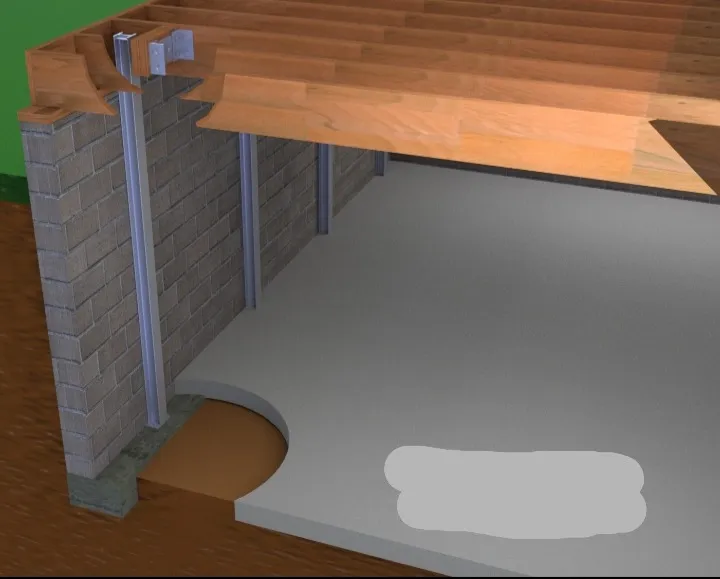
Concrete block walls from the 1940s through 1970s — common in Beaverdale, Waveland Park, and the south side — develop horizontal cracks along the mortar courses as the blocks separate under pressure. If the deflection stays under two inches, carbon fiber straps or steel I-beams can hold the wall in place. But when blocks have shifted off the footing, when the wall has bowed past what bracing systems can manage, or when previous repair methods have failed, the wall needs to be removed and rebuilt.
Learn about our full wall replacement process and how it compares to other repair methods →
What Signs Mean a Des Moines Basement Wall Needs Replacement?
Not every bowing wall needs replacement. These are the signs that stabilization is no longer enough.
Wall Bowed More Than 2 Inches
A basement wall deflected two or more inches inward has exceeded what bracing can safely manage. In Des Moines, glacial till soil retains heavy moisture during spring snowmelt and summer storms, generating lateral pressure that accelerates wall deflection. Homes along the Des Moines and Raccoon Rivers face the highest soil saturation levels.
Wall Has Shifted Off the Footing
When a wall slides laterally off the footing it sits on, the structural connection is broken. No carbon fiber or wall anchors can reattach it. Des Moines homes built on glacial till experience footing-level movement because the clay content shifts seasonally and does not compact uniformly beneath the foundation.
Multiple Structural Cracks Across the Wall
A single horizontal crack can often be braced. When horizontal cracks, vertical displacement, and corner separation all appear together, the wall is failing as a unit. Concrete block walls from the 1940s through 1970s — common in Beaverdale, Waveland Park, and south side Des Moines — are prone to this pattern because mortar joints between blocks are the weak points.
Previous Repair Methods Have Failed
When carbon fiber straps have debonded, I-beams have shifted, or wall anchors have pulled through, the wall has moved beyond what those systems were designed to handle. The combination of heavy soil moisture, deep frost penetration, and aging construction across Des Moines can overwhelm repair systems that perform well in less aggressive conditions.
Deteriorated or Crumbling Wall Material
Older stone, fieldstone, and early concrete block walls deteriorate from decades of moisture exposure. In Sherman Hill and Drake, pre-1920 foundations were built with limestone and lime-based mortar that absorbs water and softens over time. When the wall material itself is crumbling, there is nothing structurally sound left to anchor to.
Water Entering Through the Wall Itself
Seepage through mortar joints is common and fixable with interior drainage. When water pours through structural cracks or deteriorated wall material during every storm, the wall is no longer functioning as a barrier. The high water table near the Des Moines river confluence creates year-round hydrostatic pressure that overwhelms compromised walls.
Basement wall concerns in Des Moines?
Free structural assessment for Polk County homeowners. We measure the deflection, check the footing, and give you an honest recommendation — repair or replace.
How Does JLB Replace a Foundation Wall?
Eight steps from assessment to final inspection. Every project follows this sequence — no shortcuts, no skipped steps.
Structural Assessment
We inspect the wall, measure deflection, check the footing, and evaluate soil and drainage factors. Everything is documented with a written scope of work before we touch anything.
Temporary Shoring
Engineered temporary supports carry the load of the structure above while the wall is removed. Steel beams and hydraulic jacks transfer the weight safely.
Exterior Excavation
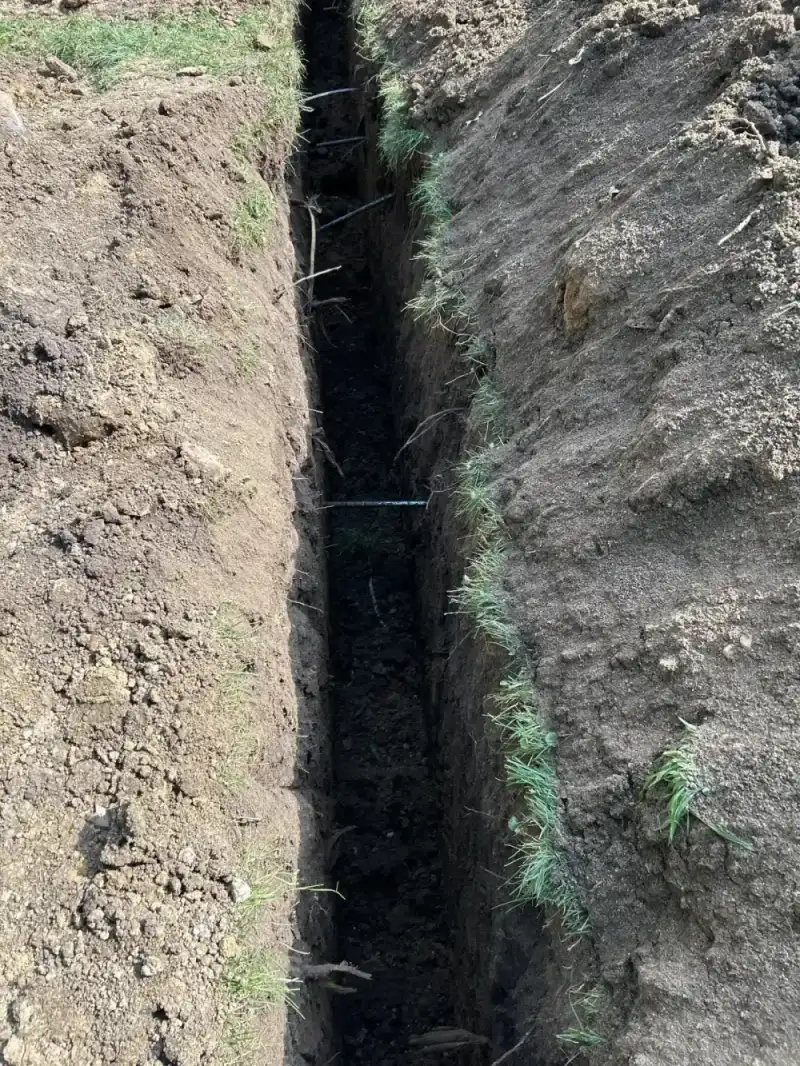
We excavate along the exterior down to the footing — typically 8 to 10 feet deep. This exposes the full wall and gives access for drainage and waterproofing.
Wall Demolition
The failed wall is demolished section by section. Whether bowed block, fractured concrete, or deteriorated stone, we remove it completely down to the footing.
Footing Inspection & Repair
With the wall out, we inspect the footing for cracking, settlement, or erosion. If the footing is compromised, we repair or reinforce it before building the new wall.
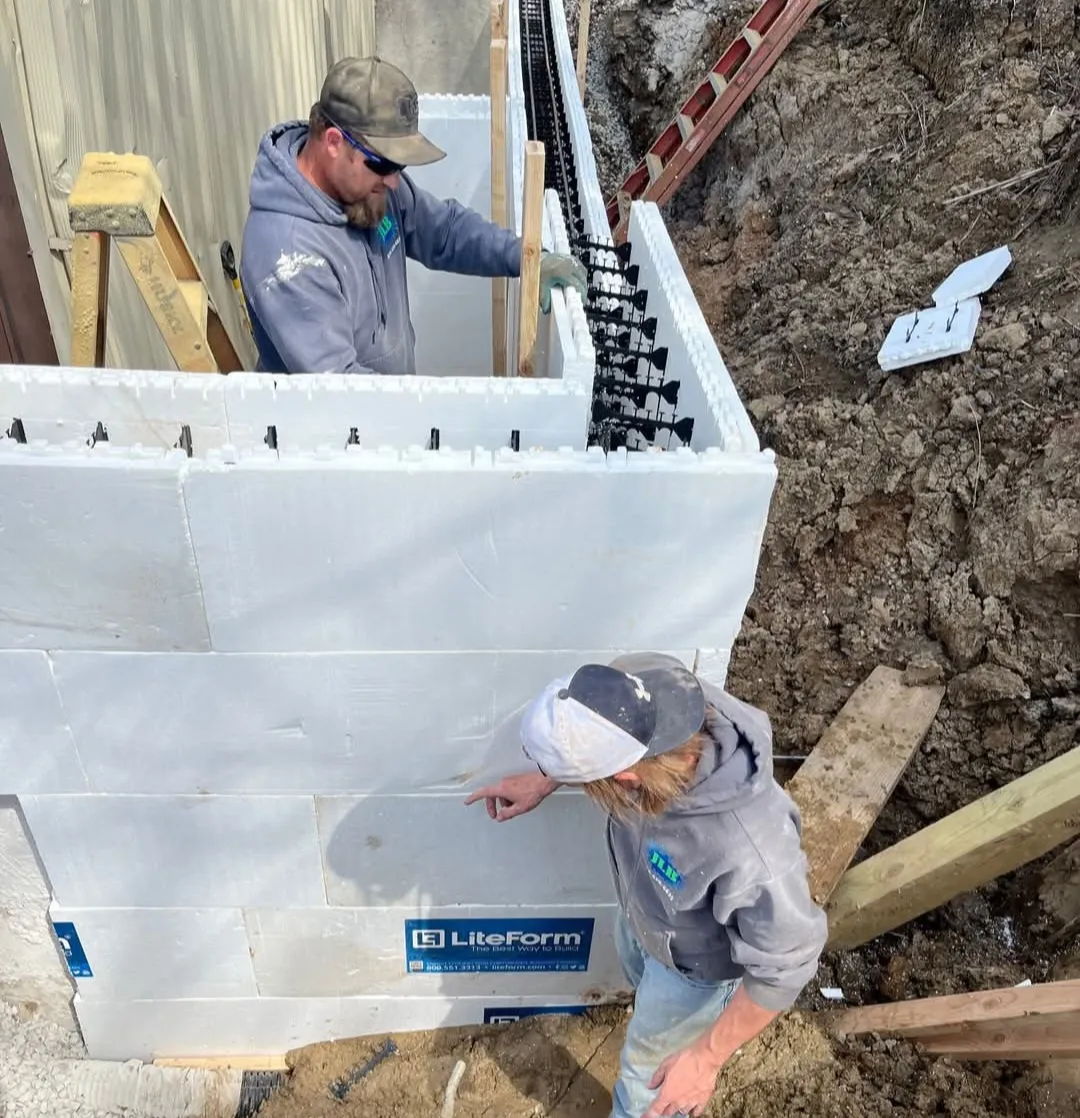
Steel-Reinforced Wall Pour
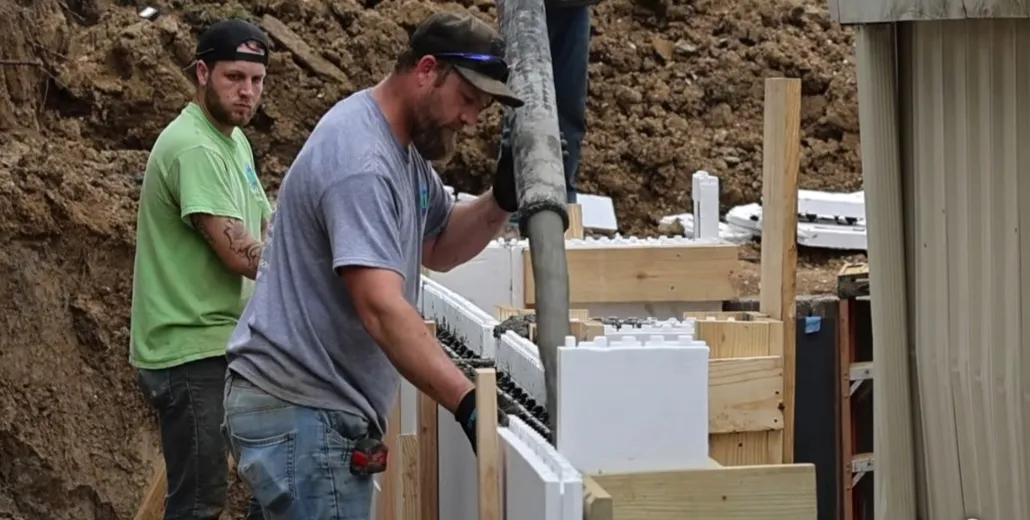
Steel rebar reinforcement is set, forms are built, and a new concrete wall is poured — engineered to handle the lateral soil pressure that destroyed the original.
Waterproofing & Drainage
A waterproofing membrane goes on the exterior of the new wall, and a footing drain is installed to manage groundwater before backfilling.
Backfill & Grade
We backfill in compacted lifts to prevent future settlement, grade the soil to direct surface water away, and clean up the site. Final inspection confirms everything meets spec.
Who Handles Wall Replacement in Des Moines?
JLB Basement Waterproofing & Foundation Repair is based in the Des Moines metro with a crew that has worked on hundreds of foundation projects across Polk County. When we show up at your home, you get the same team from inspection through final backfill. We know Des Moines soil because we work in it every week — the glacial till, the river-adjacent water tables, the freeze-thaw cycles that wear down older walls. One crew, local knowledge, start to finish.
Call (515) 444-9234Why Do Des Moines Homeowners Trust JLB for Wall Replacement?
Wall replacement is the biggest job in foundation repair. Here is why Des Moines homeowners choose us for it.
Last-Resort Philosophy
We exhaust every stabilization option before recommending replacement. Carbon fiber, I-beams, wall anchors — if they can work, that is what we recommend. Wall replacement is only on the table when the wall genuinely cannot be saved.
Engineered for Des Moines Soil
The new wall is designed for the lateral loads specific to Polk County's glacial till. Steel rebar reinforcement, proper concrete mix, and exterior drainage account for the moisture and soil conditions that failed the original wall.
Complete System Approach
Wall replacement is not just a new wall. We waterproof the exterior, install a footing drain, grade the backfill to direct water away, and address every condition that caused the failure. The wall and the system around it are both new.
Transferable Warranty
Our wall replacements carry a transferable warranty covering the structural wall, waterproofing membrane, and drainage system. If you sell your Des Moines home, the warranty transfers to the next owner — protecting your investment.
Real Projects. Real Results.
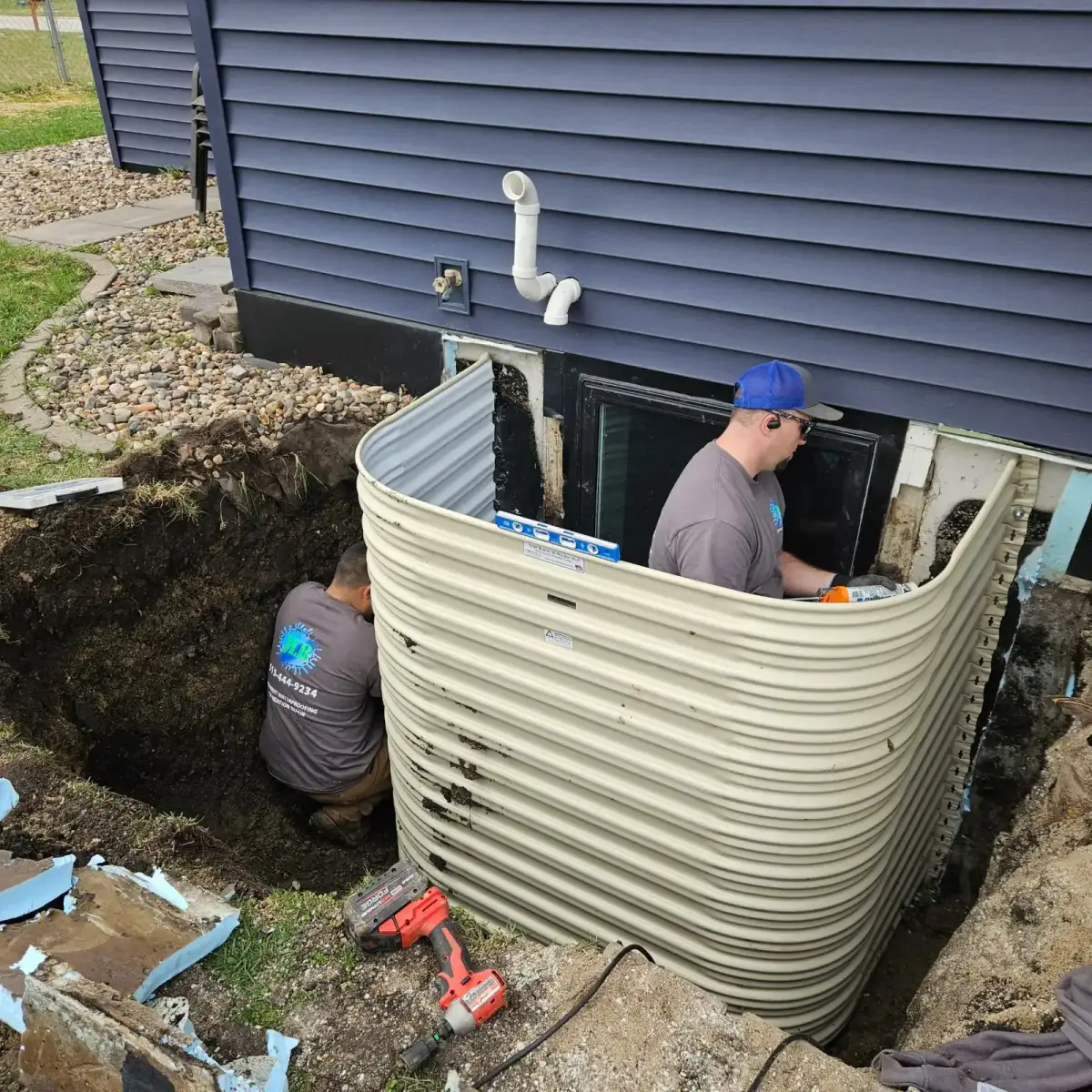
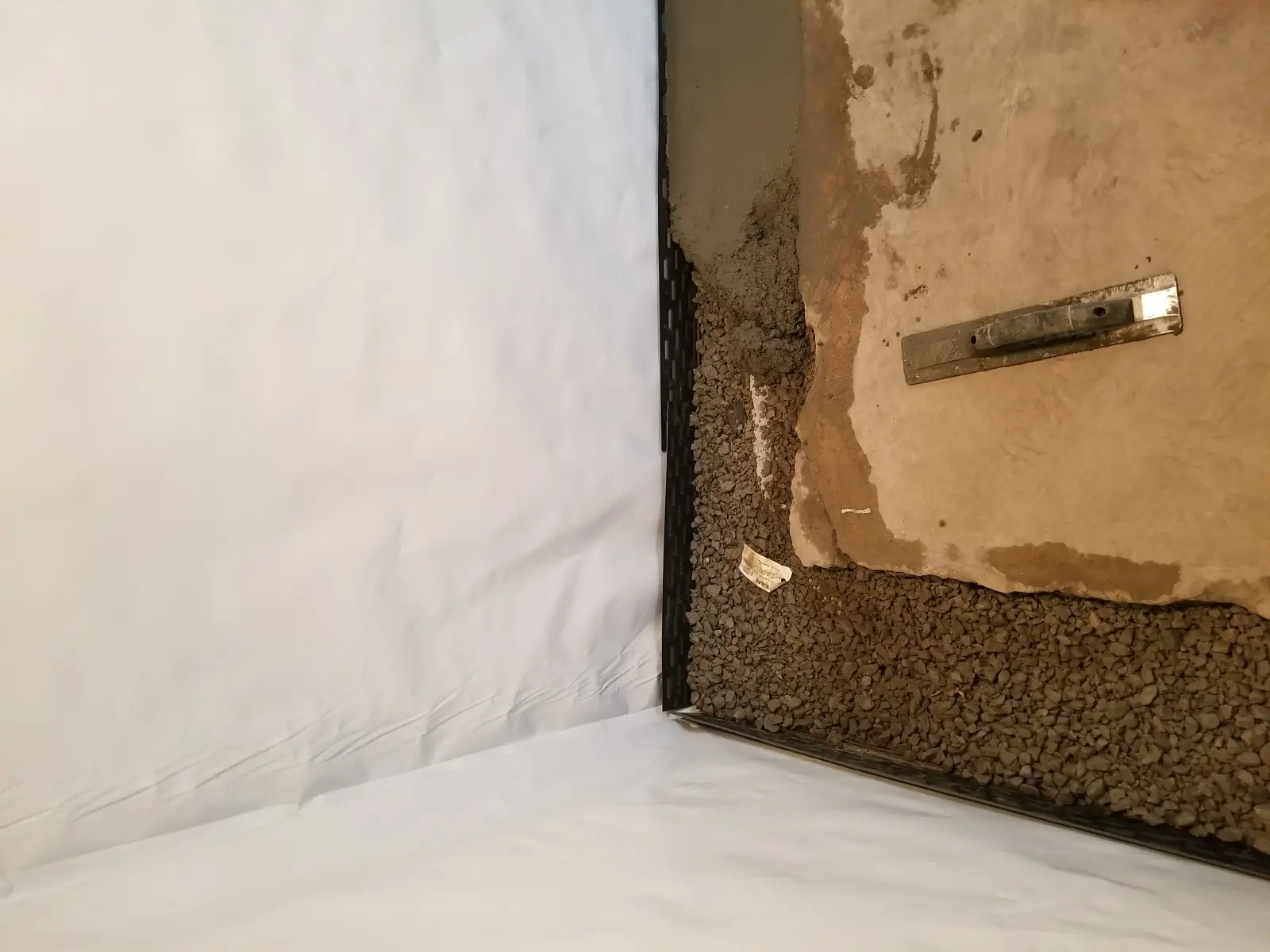
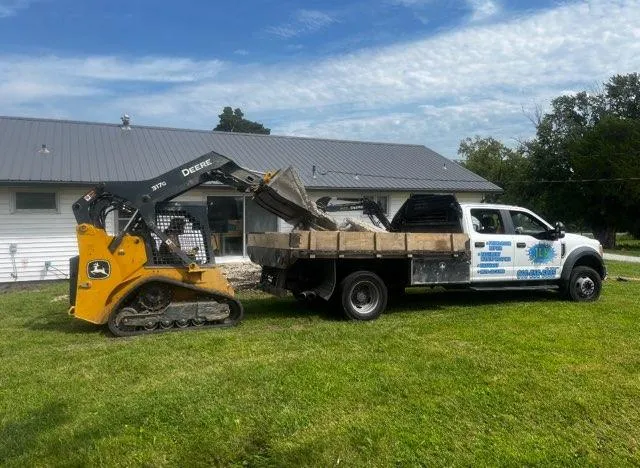
Every photo is from an actual JLB job site — not a stock photo. See the work we do every day across Kansas City and Des Moines.
Foundation Wall Replacement in Des Moines — FAQ
Des Moines sits at the confluence of the Des Moines and Raccoon Rivers on glacial till soil with high clay content. This soil retains moisture during spring snowmelt and summer storms, generating lateral pressure against basement walls. Freeze-thaw cycles expand and contract the soil repeatedly throughout winter. Older stone foundations in Sherman Hill and Drake absorb this moisture directly. Over decades, the combination of hydrostatic pressure, frost heave, and material deterioration pushes walls past their structural limits.
We replace all types found across Des Moines: stone and fieldstone walls from pre-1920 homes in Sherman Hill and Drake, concrete block walls from 1940s through 1970s homes in Beaverdale and Waveland Park, and deteriorated poured concrete from later construction. Regardless of original material, every replacement wall is built with steel-reinforced poured concrete — stronger than any of the original materials and paired with exterior waterproofing and drainage.
Yes. Foundation wall replacement in Polk County requires a building permit and inspection. JLB handles the permit application and coordinates all required inspections as part of the project. The permit process covers structural engineering, temporary shoring plans, and final inspection of the new wall. It adds a few days to the timeline but protects you by verifying the work meets current building code.
Our structural assessment measures wall deflection, checks whether the wall has shifted off the footing, evaluates the condition of the wall material, and reviews any previous repair history. If the wall has deflected less than two inches and the material is structurally sound, we recommend stabilization — carbon fiber, I-beams, or wall anchors depending on severity. We only recommend replacement when those methods genuinely cannot solve the problem. You receive a written scope of work explaining our recommendation.
The wall replacement itself includes exterior waterproofing — a membrane applied to the outside of the new wall before backfilling — plus a footing drain to manage groundwater. If you also need an interior drainage system or sump pump, we can include that in the project scope. Many Des Moines homeowners combine wall replacement with interior waterproofing to address both the structural and moisture problems in one project.
Concrete pours require temperatures above 25°F and careful cold-weather curing. In Des Moines, that limits outdoor concrete work during the coldest weeks from late November through February. We schedule wall replacements year-round when weather windows allow and use insulated curing blankets when needed. If your wall is in urgent condition during winter, we install temporary shoring to stabilize the structure and schedule the pour for the next suitable window.
Yes — and this is where wall replacement solves more than stabilization alone. When we rebuild a wall, we install a complete exterior waterproofing system and drainage at the footing level. For Des Moines homes near the river confluence where the water table stays high year-round, this exterior drainage intercepts water before it reaches the wall. The new wall itself is denser and more water-resistant than old block or stone.
Not Sure What You're Dealing With?
Click any symptom below to learn what it means, what's likely causing it, and how we can help. Most of these are more common — and more fixable — than you'd think.
Diagonal, stair-step, or horizontal cracks in drywall, plaster, or brick usually trace back to soil movement beneath your foundation. The heavy clay soils in the Kansas City and Des Moines metros expand and contract seasonally, which can shift your foundation over time. The good news: this is very fixable with the right approach.
Water entering through floor joints, wall cracks, or seeping through porous concrete means groundwater pressure is pushing moisture into your basement. An interior drainage system and sump pump can solve this permanently — and we can usually have it done in a day or two.
When a foundation settles unevenly, it can shift your home's frame just enough to make doors and windows bind. This is one of the earlier signs of foundation movement — and catching it early often means a simpler, less expensive repair.
That musty smell is moisture. Up to 40% of the air in your home rises from below — from your crawlspace and basement. If there's excess humidity down there, it affects your whole home. Encapsulation seals it out, and you'll notice the difference in your air quality right away.
Floors that slope toward the center or an exterior wall usually mean the support structure underneath needs attention. Push piers can stabilize your foundation and often lift it back to level — giving your floors a second life.
When soil washes out or compacts beneath a concrete slab, the slab drops and becomes uneven. Polyjacking uses expanding polyurethane foam to fill the void and lift the concrete back to grade — usually in under a day, with no heavy equipment needed.
Water collecting near your foundation means your grading or drainage isn't directing water away effectively. French drains, regrading, extended downspouts, and drain pipes can redirect water away from the house — protecting your foundation for the long haul.
A basement wall that has bowed more than 2 inches inward, shifted off its footing, or shows multiple structural cracks may have moved beyond what bracing can fix. When carbon fiber straps, I-beams, or wall anchors are not enough, the wall needs to be removed and rebuilt with reinforced concrete. This is the last resort — but it is the permanent fix when the wall itself is compromised.
Get Your Free Wall Assessment in Des Moines
Fill out the form and a foundation specialist will contact you within 24 hours to schedule your free structural assessment. Or call us now at (515) 444-9234.
Get Your Free Inspection
Takes 30 seconds. We'll call within 24 hours.
Thank You!
We received your request. A foundation specialist will contact you within 24 hours to schedule your free inspection.
Which Des Moines Neighborhoods Does JLB Serve?
We serve every corner of Des Moines for foundation wall replacement and all other foundation services.
Where Else Does JLB Serve in the Des Moines Metro?
Our Locations
We're always close enough to help — our crews are local to your area.
JLB Basement Waterproofing & Foundation Repair — Des Moines
97 Indiana Ave Suite #1Des Moines, IA50314(515) 444-9234 View on Google Maps
Stop the Damage. Get Answers Today.
A free inspection takes 45 minutes and tells you exactly what's going on under your house — and exactly what it takes to fix it.