Foundation Repair in Independence, Missouri — The Right-Depth Piering Approach for Limestone Ground
Two things set Independence apart on the east side of Jackson County: the ground is hilly with limestone breaking close to the surface in places, and much of the housing was either built into those slopes or dates to the pre-war stone era around the Square. Both change the repair calculation — limestone that outcrops near the surface a few streets from where it runs deep means the working depth of a pier is genuinely variable across the city.
Get a precise analysis of your foundation and waterproofing situation, and a clear estimate on what any fixes or corrections might cost.
Takes 30 seconds. We'll call within 24 hours.
We'll be in touch within 24 hours.
Why do Independence's limestone outcroppings change how deep a pier has to go?
A pier does one job: it carries the weight of the house down past the soil that is moving and stops on ground that will hold. In most of the metro that stopping point is at a fairly consistent depth. In Independence it is not, and the reason is limestone. The hilly ground east of Kansas City has rock breaking close to the surface in some places and running well below the Wymore-Ladoga clay a few streets away, so where one house reaches competent bearing quickly, its neighbor's piers must travel much farther to find it. That variability is the defining feature of foundation repair here.
It has a practical consequence for how the work is done. Where limestone sits shallow, a pier reaches refusal — solid rock — quickly, which is a good outcome: dependable bearing close to the surface. Where the clay runs deep before rock, the same pier keeps advancing until it finds a load-bearing stratum it can trust. Because the depth is not predictable from the street, torque-monitored installation matters more here than in flatter, deeper-soil towns: it measures when each pier has actually reached capacity rather than assuming it hit a standard depth. Two piers ten feet apart on an Independence lot can stop at very different depths and both be correct.
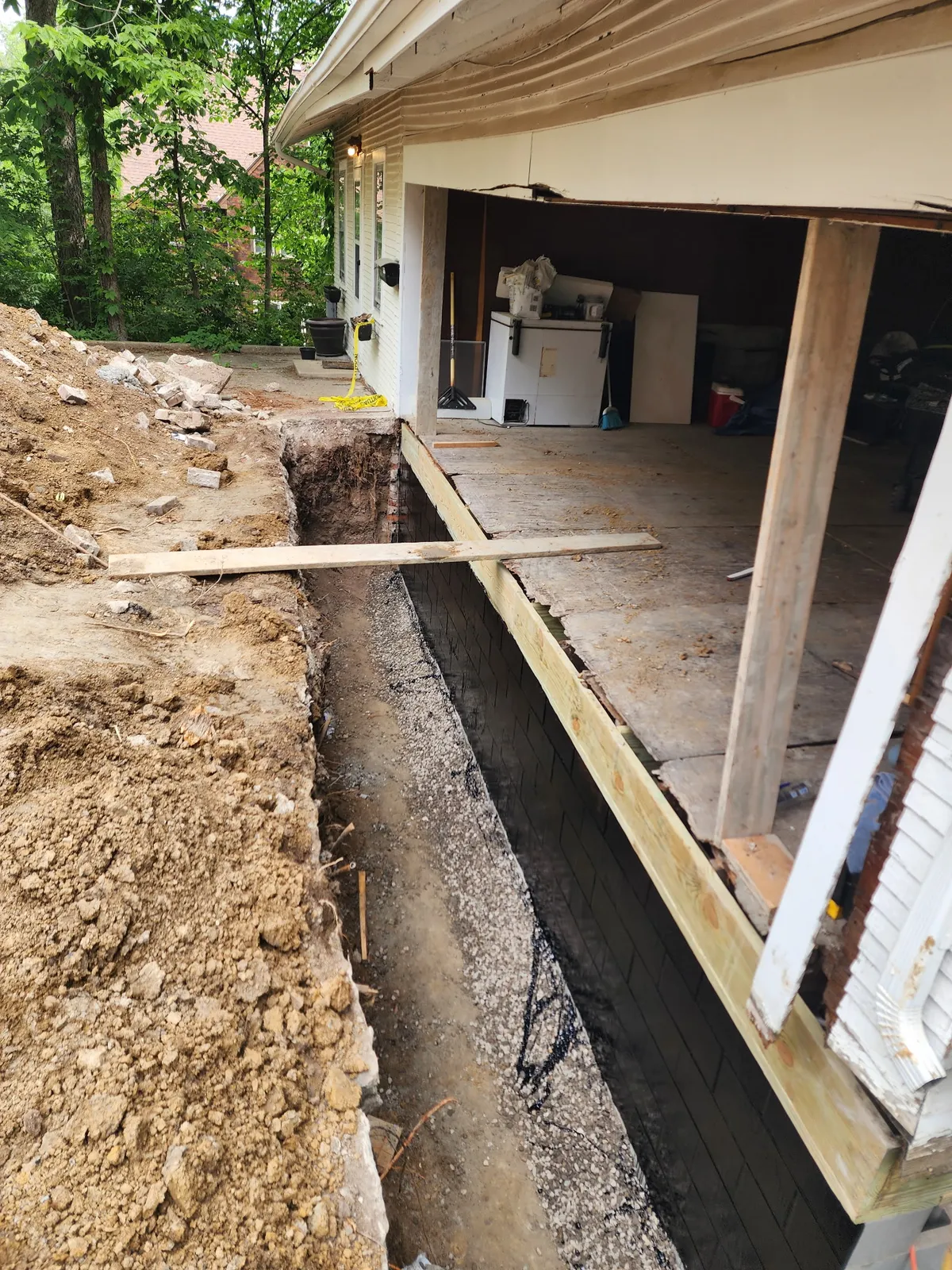
The historic core is the other half of the Independence story. Around Independence Square, the Truman Library, and the Bingham-Waggoner Estate, the foundations are quarried stone laid in soft mortar. The local pattern is a wall that 'sweats' and mortar that has degraded, and it usually traces to poor exterior grading — water pooled against the wall for decades. On the hilly lots here that water often arrives from the uphill side, keeping one stretch of wall saturated while the rest of the perimeter drains. The stone itself is generally still sound; the mortar and the grading are what have failed, which points to a very different repair from piering.
The Truman-era suburban expansion — roughly the 1950s into the 1970s — is the third piece, and much of it was built into the slopes. Those foundations are largely concrete block, which carries downward weight well and resists sideways pressure poorly. A block wall set into a hillside takes clay pressure from the uphill side, so it fails in stair-step cracking along the mortar joints or a horizontal crack near mid-height — the signature of a wall being pushed, not one settling.
Laid out by which Independence you are in:
| Independence area and era | Typical foundation | How it usually fails | What is driving it | What the repair addresses |
|---|---|---|---|---|
| Historic core near the Square (1880s–1940s) | Quarried stone in soft mortar | 'Sweating' walls, mortar washout, stones working out of plane | Poor exterior grading saturating masonry, often from the uphill side | Correct grading and drainage, repoint sound stone, anchor or rebuild moved sections |
| Truman-era suburban (1950s–70s), built into slopes | Concrete block | Stair-step or horizontal cracking | Lateral clay pressure from the uphill side | Wall anchors, carbon-fiber straps, or bracing with uphill drainage |
| Post-1970 poured on variable ground | Poured concrete | Vertical cracking; floors out of level | Differential bearing where limestone is shallow one place and deep clay another | Push or helical piers, depth set on site |
Matching method to failure is the whole task. A house dropping because a footing lost bearing gets piers carried to load-bearing strata — push piers where the structure is heavy enough to drive against, helical piers under lighter loads, both torque-monitored, and on Independence's variable ground the depth is decided pier by pier rather than drawn in advance. A stone wall in the core gets its water fixed first, then repointing where the stone is sound and anchoring or partial rebuilding where it has moved. A block wall being pushed by uphill clay gets restrained — straps, anchors, or bracing — with the uphill drainage corrected so the pressure does not return. How each system is specified is set out on the foundation repair page.
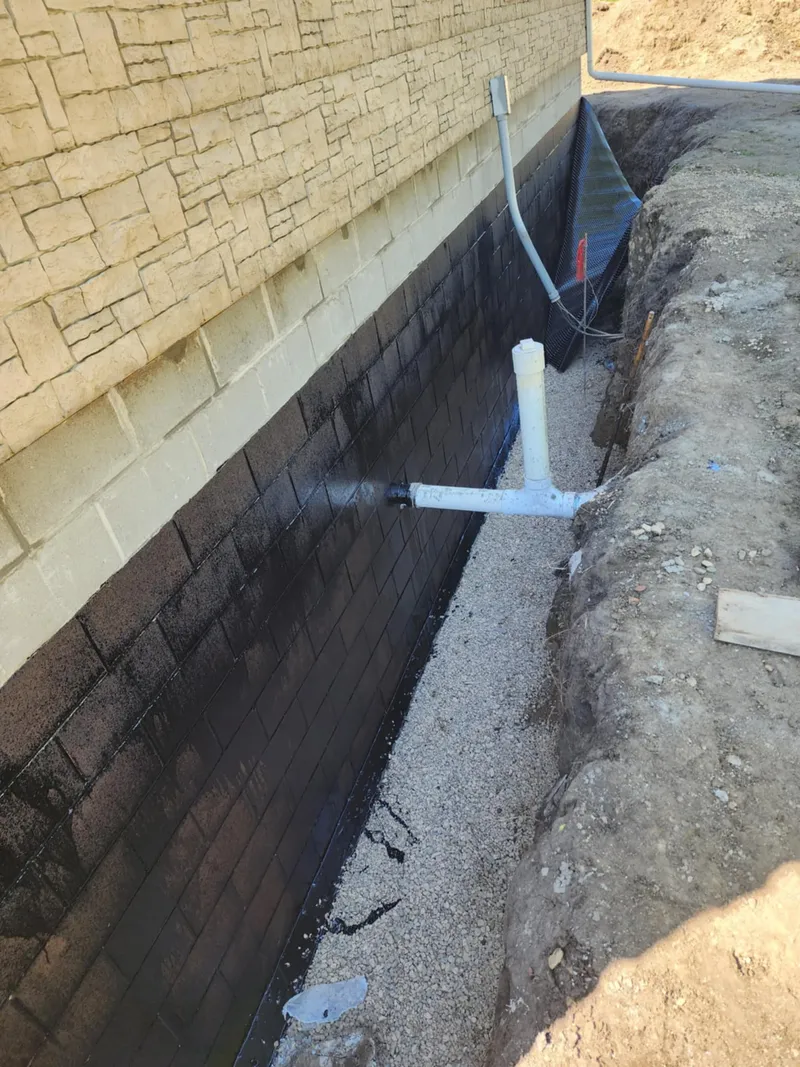
On price, the variable ground makes per-pier quoting especially unreliable, because the same house can need short piers on one corner and long ones on another. Typical market ranges put push piers around $1,250 to $2,500 each with helical roughly $1,800 to $3,000, but the count and the depth both come from measuring on site, and a stone wall in the core is priced by linear feet of repointing and restraint rather than by piers at all — so an exact figure needs an on-site estimate. Because so much of the movement here traces to water held against a wall by poor grading, many Independence repairs pair the structural work with drainage and waterproofing correction. JLB works the same Jackson County ground through Kansas City, Blue Springs, Lee's Summit, Raytown, and Grain Valley, with I-70, I-435, and Noland Road tying the east metro together.
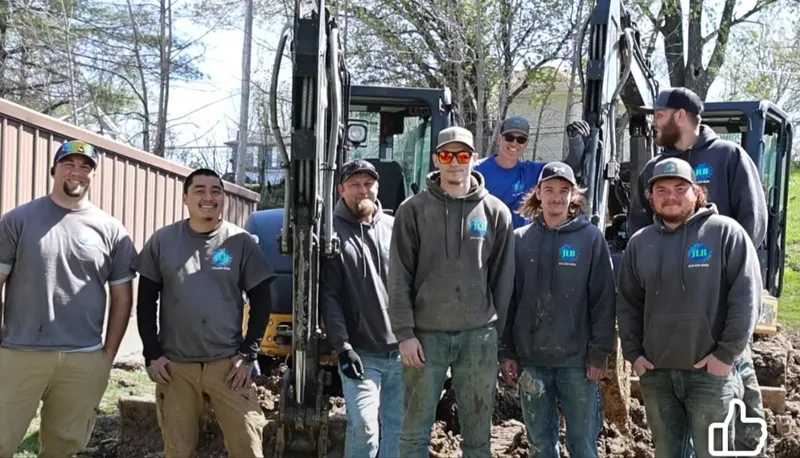
Meet the Team Serving Independence
JLB is a local crew — not a franchise. We handle foundation repair across Independence and the Kansas City metro. Watch to see who shows up at your door.
Watch Foundation Repair Work in Independence
Two Ways to Pay Over Time
12 Months Same As Cash
Pay the full balance within 12 months and you pay no interest.
5 Years at 6.99% APR
A lower monthly payment, spread over 60 months.
On approved credit. Ask for full terms at your free estimate.
Foundation and water problems rarely get cheaper while they wait.
What Foundation Warning Signs Are Common in Independence's Older Homes?
The warning signs and what each one means are on our foundation repair page.
Noticed cracks in your Independence basement walls?
The stone and limestone foundations common in Independence develop predictable failure patterns — and early detection makes the difference between a straightforward repair and a major structural project. A free estimate takes about an hour and tells you exactly where you stand.
Who Handles Foundation Repair in Independence?
With nearly 123000 residents, Independence keeps our Jackson County crews busy year-round. From established neighborhoods to newer developments, we know the soil, we know the foundations, and we know the local permit process. When we show up at your door, you're getting the same team from inspection through final walkthrough.
Call (816) 408-3651“We had cracks running up our walls and doors that wouldn't close. JLB came out, explained exactly what was happening with the soil under our house, and had the piers installed in two days. Floors are level again. Wish we hadn't waited so long.”
Real Projects. Real Results.
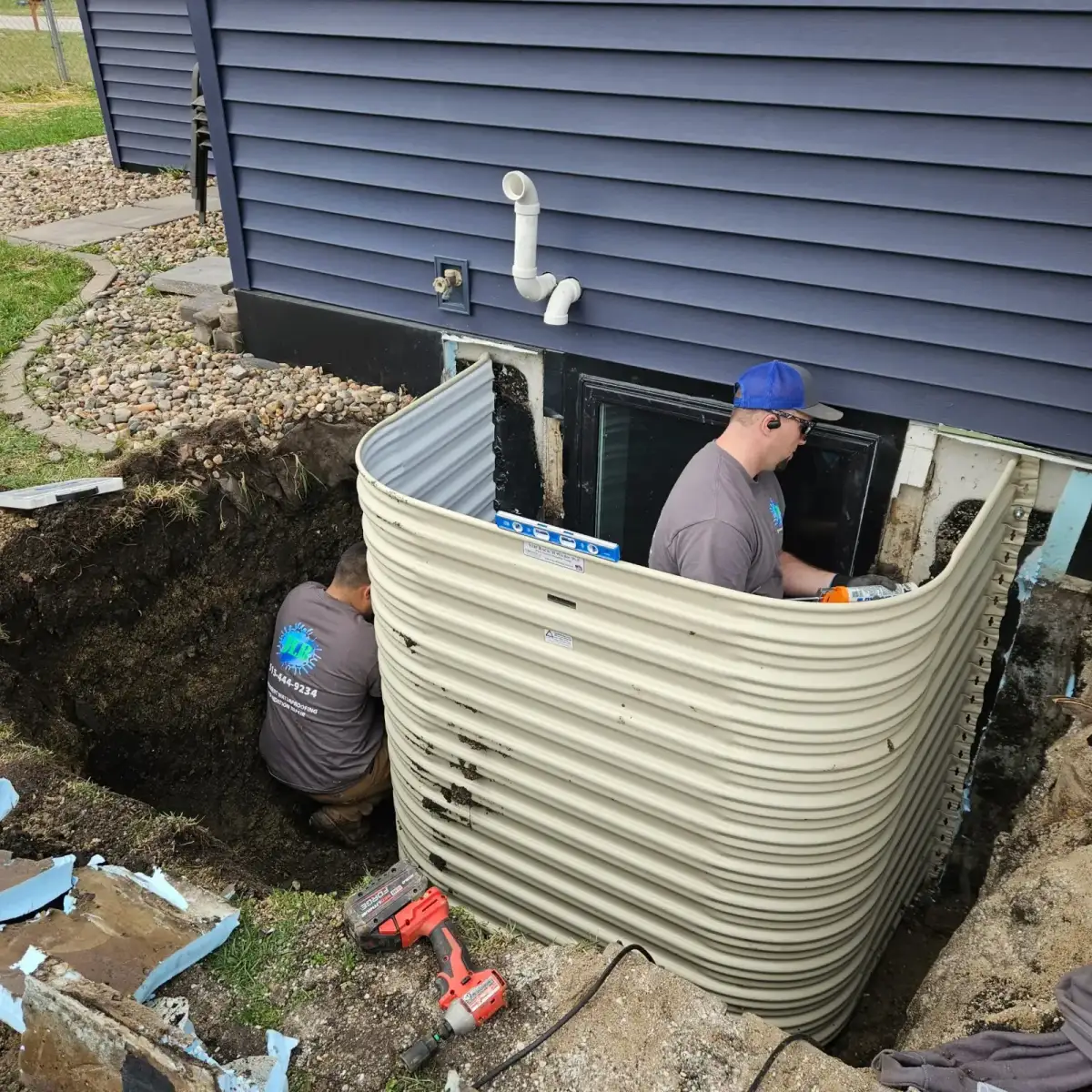
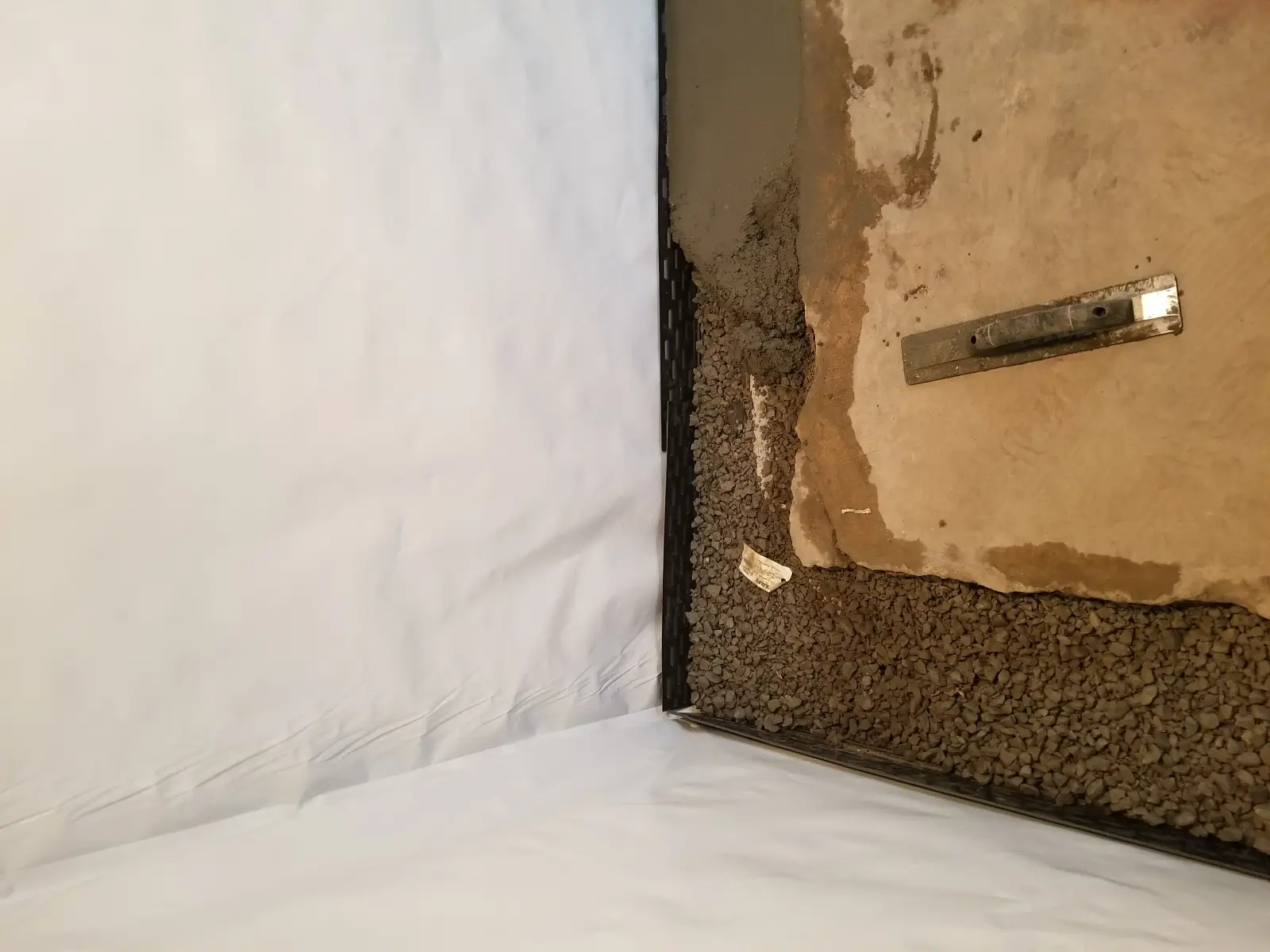
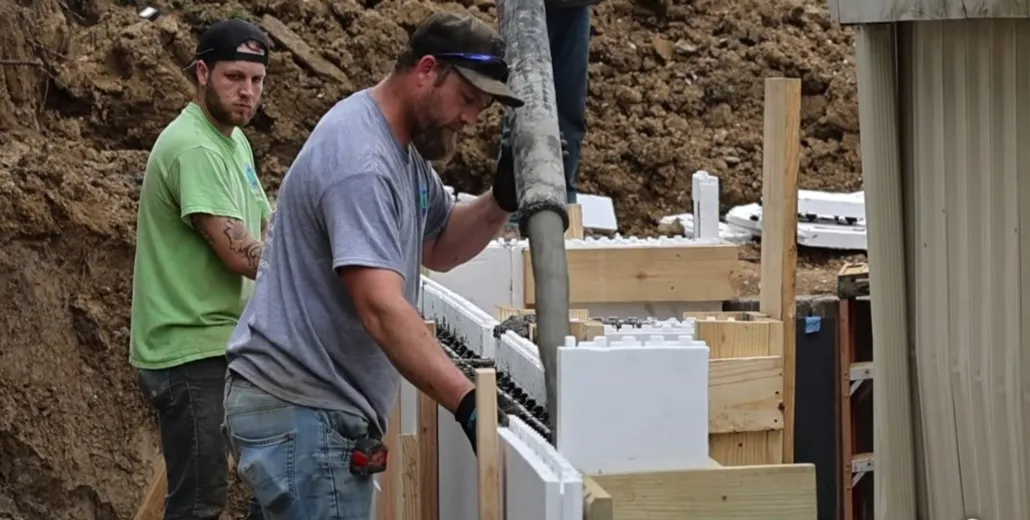
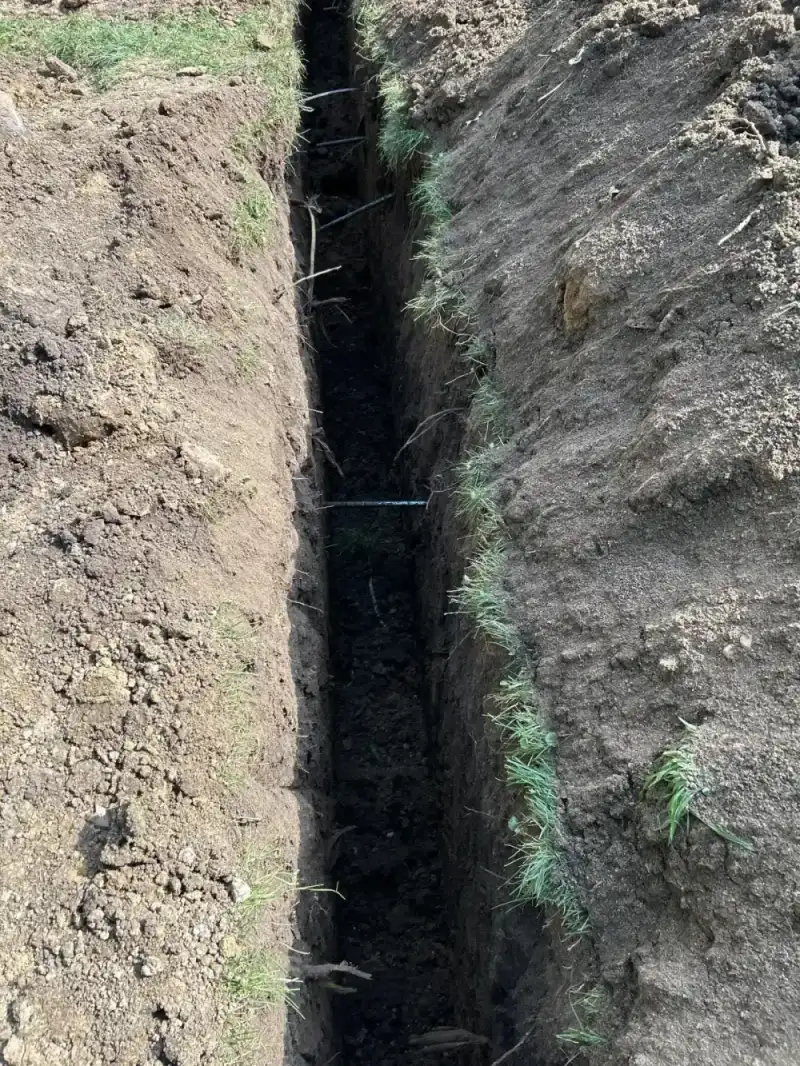
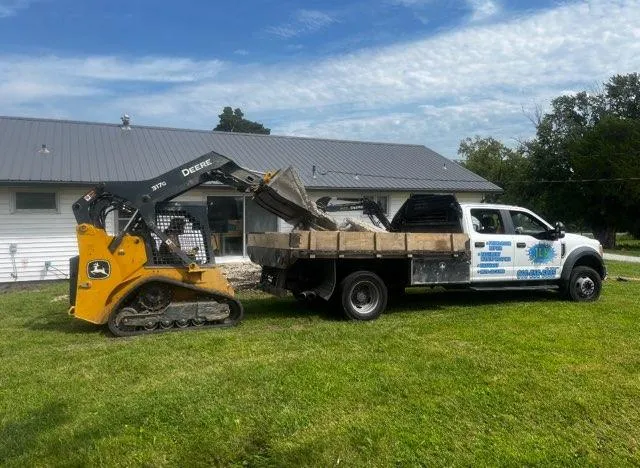
Every photo is from an actual JLB job site — not a stock photo. See the work we do every day across Kansas City and Des Moines.
What Does Foundation Repair Cost in Independence, MO?
Independence's older housing stock — many homes built on stone and limestone foundations from the Historic core (1880s-1940s) with mid-century suburban expansion in the 1950s-70s. — often requires more extensive structural work than newer suburbs. Here's what Jackson County homeowners typically pay for foundation repair in 2026.
| Repair Type | Typical Cost Range | Notes |
|---|---|---|
| Crack repair (epoxy/polyurethane injection) | $250–$800 per crack | Non-structural hairline cracks |
| Steel push piers | $1,000–$3,000 per pier | Permanent fix for settling foundations; most homes need 6–12 piers |
| Helical piers | $1,500–$3,500 per pier | Used when soil conditions require screwing into load-bearing strata |
| Wall anchors | $500–$1,000 per anchor | Stabilizes bowing basement walls; typically 4–8 per wall |
| Carbon fiber reinforcement | $300–$600 per strip | For minor to moderate wall bowing; less invasive than anchors |
| Minor foundation repair (total project) | $1,500–$5,000 | Small cracks, minor settling |
| Major foundation repair (total project) | $5,000–$15,000+ | Multiple piers, structural wall repair, significant settling |
| Structural engineer report | $300–$800 | Sometimes required before repair, sometimes included in estimate |
These ranges reflect typical Kansas City metro pricing as of 2026. Actual costs vary based on the severity of damage, accessibility, and specific repair method. JLB provides free estimates — call (816) 408-3651 for an accurate quote.
Two Ways to Pay for It
12 Months Same As Cash
Pay the full balance within 12 months and you pay no interest.
Best if you can pay it off within a year.
5 Years at 6.99% APR
A lower monthly payment, spread over 60 months.
Best for bigger projects.
On approved credit. Ask for full terms at your free estimate.
Foundation and water problems rarely get cheaper while they wait.
Foundation Repair Questions From Independence Homeowners
Because the limestone under Independence is not at a constant depth. The hilly ground east of Kansas City has rock breaking close to the surface in some spots and dipping well below the Wymore-Ladoga clay a short distance away. A pier is driven or turned until it reaches ground that will carry the load, so where the limestone is shallow it reaches refusal quickly, and where the clay runs deep it keeps advancing until it finds a competent stratum. That is why a per-house depth cannot be promised from the street, and why torque monitoring during installation is used to confirm each pier has actually reached capacity rather than assuming it stopped at a set depth.
It can become one, but it usually starts as a water-and-mortar problem rather than a failure of the stone. On the pre-war stone foundations around Independence Square, the stone itself is generally still sound; the soft mortar between it is the wear surface, and years of water held against the wall by poor exterior grading soften it and keep the masonry damp. On the hilly lots here that water often comes from the uphill side, saturating one stretch of wall. The fix begins with the grading and drainage that are feeding the wall, then repointing where the stone is in plane, and anchoring or partial rebuilding only where the wall has actually moved. Addressing the mortar without fixing the water just washes the new mortar out again.
Because that is the wall taking the pressure. A home built into a slope has one side buried deep against the uphill ground, and in Jackson County that ground is Wymore-Ladoga clay that swells when wet. The buried uphill wall carries the sideways push of that clay, while the downhill walls do not, so it is the one that fails — in stair-step cracking along the mortar joints or a horizontal crack near mid-height. Both are lateral-pressure signatures on a block wall, which resists sideways load poorly. The repair holds that wall with anchors, carbon-fiber straps, or bracing and corrects the uphill drainage so the clay against it stops being re-saturated.
Not a different kind so much as a more carefully placed one. Both push piers and helical piers are used in Independence; the choice follows the load — push piers where the structure is heavy enough to drive against, helical piers under lighter elements like a porch or addition. What the limestone changes is the depth, and the fact that it can change across a single foundation. That is exactly where torque-monitored installation earns its place: it reads the capacity each pier is developing as it advances, so a pier that reaches shallow rock and one that has to travel through deeper clay are both confirmed to be carrying load before the house is transferred onto them. The pier type is chosen for the house; the depth is settled on site.
It depends on whether the wall has moved yet. On the stone foundations in the core, poor grading and the water it holds against the wall are frequently the root cause, and catching it before the wall shifts means that correcting the grade, the downspouts, and the drainage can be most of the repair, followed by repointing the softened mortar. Once the wall has begun to belly or stones have worked out of plane, grading alone will not put it back — the wall has to be held, and in some cases a section rebuilt, before or alongside the drainage work. The sequence is always water first where the wall is still sound, and restraint first where it is not.
The variable ground here makes per-pier quoting especially rough, because the same house can need short piers where limestone is shallow and long ones where the clay runs deep, and the count depends on how much of the footing lost support. Typical market ranges put push piers around $1,250 to $2,500 each and helical roughly $1,800 to $3,000, but a stone wall in the core is priced by linear feet of repointing and restraint rather than by piers at all. Because depth, count, and wall length all have to be measured, an exact figure needs an on-site estimate — JLB's is a free 45-minute analysis with a written report you keep, including when the finding is that the movement has stopped and nothing needs doing yet.
Not Sure What You're Dealing With?
Click any symptom below to learn what it means, what's likely causing it, and how we can help. Most of these are more common — and more fixable — than you'd think.
Diagonal, stair-step, or horizontal cracks in drywall, plaster, or brick usually trace back to soil movement beneath your foundation. The heavy clay soils in the Kansas City and Des Moines metros expand and contract seasonally, which can shift your foundation over time. The good news: this is very fixable with the right approach.
Water entering through floor joints, wall cracks, or seeping through porous concrete means groundwater pressure is pushing moisture into your basement. An interior drainage system and sump pump can solve this permanently — and we can usually have it done in a day or two.
When a foundation settles unevenly, it can shift your home's frame just enough to make doors and windows bind. This is one of the earlier signs of foundation movement — and catching it early often means a simpler, less expensive repair.
That musty smell is moisture. Up to 40% of the air in your home rises from below — from your crawlspace and basement. If there's excess humidity down there, it affects your whole home. Encapsulation seals it out, and you'll notice the difference in your air quality right away.
Floors that slope toward the center or an exterior wall usually mean the support structure underneath needs attention. Push piers can stabilize your foundation and often lift it back to level — giving your floors a second life.
When soil washes out or compacts beneath a concrete slab, the slab drops and becomes uneven. Polyjacking uses expanding polyurethane foam to fill the void and lift the concrete back to grade — usually in under a day, with no heavy equipment needed.
Water collecting near your foundation means your grading or drainage isn't directing water away effectively. French drains, regrading, extended downspouts, and drain pipes can redirect water away from the house — protecting your foundation for the long haul.
A basement wall that has bowed more than 2 inches inward, shifted off its footing, or shows multiple structural cracks may have moved beyond what bracing can fix. When carbon fiber straps, I-beams, or wall anchors are not enough, the wall needs to be removed and rebuilt with reinforced concrete. This is the last resort — but it is the permanent fix when the wall itself is compromised.
Get Your Free Foundation Estimate in Independence
Independence's stone and limestone foundations need specialized assessment. Fill out the form and our crew will evaluate your walls, footings, and soil conditions — all at no cost. Or call us now at(816) 408-3651.
Where Else Does JLB Provide Foundation Repair Near Independence?
Our Locations
We're always close enough to help — our crews are local to your area.
JLB Foundation Repair & Basement Waterproofing — Kansas City
111 NE 72nd St, Ste 111Kansas City, MO, 64119(816) 408-3651 View on Google Maps
Stop the Damage. Get Answers Today.
A free estimate takes 45 minutes and tells you exactly what's going on under your house — and exactly what it takes to fix it.