Foundation Wall Replacement in Kansas City & Des Moines
When a basement wall has bowed too far, shifted off its footing, or failed beyond what bracing can fix — replacement is the answer. JLB removes the compromised wall and rebuilds it with steel-reinforced poured concrete, exterior waterproofing, and proper drainage. Permanent. Warrantied. Done right.
What Happens When a Foundation Wall Can't Be Saved?
Most foundation wall problems are fixable with stabilization methods — carbon fiber straps for minor bowing, steel I-beams for moderate inward deflection, or wall anchor systems that use exterior soil plates to counter lateral pressure. These systems work well within their design limits, and JLB installs all of them.
But some walls move past the point where stabilization makes sense. A block wall that has bowed 3 inches inward and cracked in multiple places is no longer a wall with a problem — it is a compromised structural element that has lost the ability to carry load safely. A limestone wall that has deteriorated from 70 years of moisture absorption may have no sound material left for anchors to grip. A wall that has physically shifted off its footing has broken the fundamental connection between the wall and the base it rests on.
In cases like these, the honest answer is not another brace or strap. The honest answer is that the wall needs to come out and be replaced with something that will actually work for the next 75 years. That is what foundation wall replacement is: complete removal of the failed wall and reconstruction with steel-reinforced poured concrete, paired with exterior waterproofing and drainage to prevent the conditions that caused the failure in the first place.
JLB always starts with the least invasive option. We do not recommend wall replacement to sell a bigger job — we recommend it when the wall genuinely cannot be saved by other means. If carbon fiber or wall anchors will work, that is what we will tell you. But when they won't, we have the expertise and equipment to do the full replacement correctly.
When Is Foundation Wall Replacement the Right Call?
Wall replacement is a last resort — not a first option. Here is how it compares to the stabilization methods we use on the majority of bowing-wall projects.
Carbon Fiber Straps
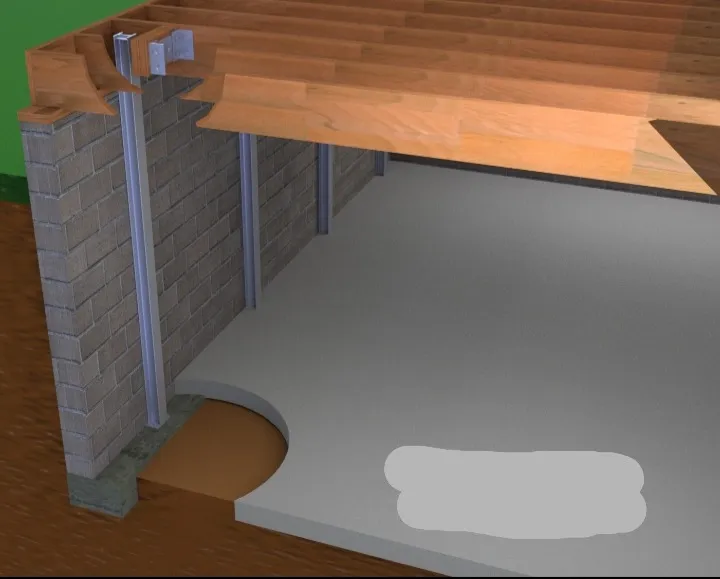
Minor Bowing- Wall deflection under 1 inch
- Single horizontal crack, no displacement
- Concrete block or poured walls in decent condition
- Least invasive, lowest cost
Stabilizes the wall and prevents further movement. Does not push the wall back.
Steel I-Beams
Moderate Bowing- Wall deflection 1 to 2 inches
- Horizontal cracking with some displacement
- Wall still on footing, material structurally intact
- Interior install, no excavation required
Stronger than carbon fiber. Braces the wall against further movement from the inside.
Wall Anchors
Moderate to Significant- Wall deflection 1 to 2+ inches
- Potential to gradually straighten over time
- Requires exterior access for anchor plates
- Only option that can restore wall to plumb
Steel rods connect the wall to anchor plates buried in stable soil outside. Can be tightened seasonally.
Wall Replacement
Severe / Beyond Repair- Wall deflection over 2 inches or off footing
- Multiple cracks, structural collapse risk
- Previous repairs have failed
- Wall material is deteriorated or crumbling
Complete removal and rebuild with reinforced concrete. Includes waterproofing and drainage.
How Does JLB Replace a Foundation Wall?
Wall replacement is a major structural project. Here is exactly what happens from first assessment to final inspection — no mystery, no shortcuts.
Structural Assessment
Our crew inspects the wall, measures deflection, checks the footing condition, and evaluates soil and drainage factors. We document everything and present a written scope of work before touching anything.
Temporary Shoring
Before removing the failed wall, we install engineered temporary supports to carry the load of the structure above. Steel beams and hydraulic jacks transfer the weight safely while the wall is out.
Exterior Excavation
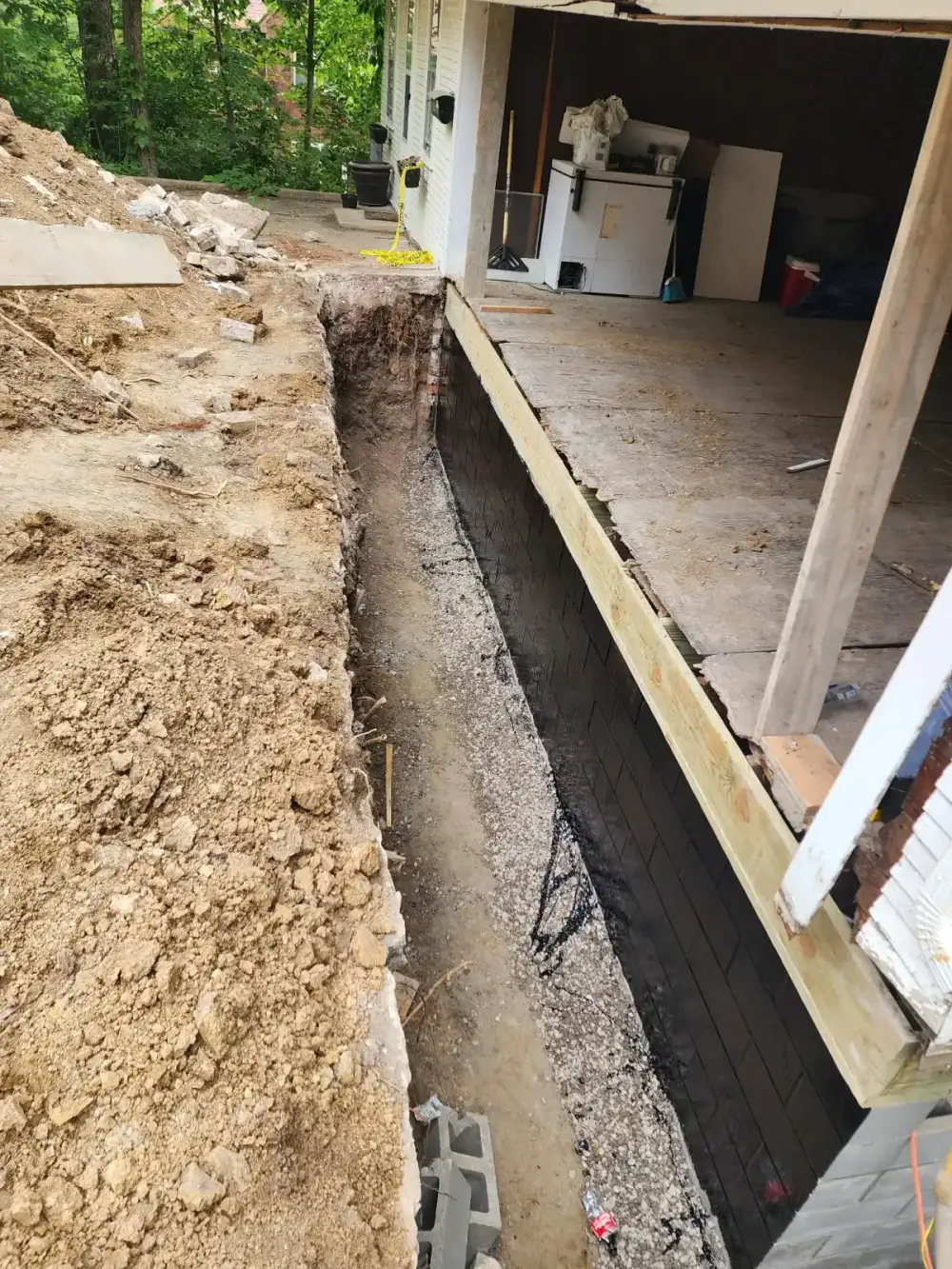
We excavate along the exterior of the wall down to the footing — typically 8 to 10 feet deep. This exposes the full wall for removal and gives us access to install drainage and waterproofing on the new wall.
Wall Demolition
The failed wall is carefully demolished section by section. Whether it is bowed block, fractured poured concrete, or deteriorated limestone, we remove it completely down to the footing. Debris is hauled off-site.
Footing Inspection & Repair
With the wall removed, we inspect the footing for cracking, settlement, or erosion. If the footing is compromised, we repair or reinforce it before building the new wall. A sound footing is non-negotiable.
Steel-Reinforced Wall Construction
We set steel rebar reinforcement, build forms, and pour a new concrete wall engineered to handle the lateral soil pressure that destroyed the original. The new wall is stronger than what it replaces.
Waterproofing & Drainage
Before backfilling, we apply a waterproofing membrane to the exterior of the new wall and install a French drain or footing drain to manage groundwater. This prevents the conditions that contributed to the original failure.
Backfill & Grade
We backfill the excavation in compacted lifts to prevent future settlement, restore the grade to direct surface water away from the foundation, and clean up the site. Final inspection confirms everything meets spec.
Why Do Homeowners Trust JLB for Foundation Wall Replacement?
Wall replacement is high-stakes work. The margin for error is zero. Here is why homeowners in Kansas City and Des Moines choose JLB for the job.
Least-Invasive-First Philosophy
We exhaust every stabilization option before recommending replacement. If carbon fiber, I-beams, or wall anchors can solve the problem, that is what we recommend. We only suggest replacement when the wall genuinely cannot be saved.
Engineering-Driven Approach
Every wall replacement is engineered for the specific soil conditions and load requirements of your home. We do not use generic specs. The rebar placement, concrete mix, and drainage design are all calculated for your property.
Complete System — Not Just a Wall
A new wall without drainage and waterproofing will eventually face the same pressures that destroyed the original. We include exterior waterproofing membrane and a drain system as standard — because the wall is only as good as the system protecting it.
Transferable Warranty
Our wall replacement warranty covers the structural wall, the waterproofing membrane, and the drainage system — and it transfers to future homeowners. This protects your investment whether you stay for 30 years or sell next year.
What Are the Signs a Wall Needs Replacement Instead of Repair?
These indicators suggest the wall has moved beyond what bracing or anchoring can safely address.
Wall Bowed More Than 2 Inches
A wall that has deflected 2 or more inches inward is at the limits of what bracing systems can safely stabilize. At this deflection, the wall may have shifted off its footing or lost structural continuity. Replacement restores full load-bearing capacity.
Wall Has Shifted Off the Footing
When a basement wall slides laterally off the footing it sits on, no amount of carbon fiber or wall anchors can push it back. The connection between wall and footing is broken. The wall must be rebuilt on a sound footing.
Multiple Structural Cracks Across the Wall
A single horizontal crack can often be braced. But when a wall has horizontal cracks, vertical displacement, and corner separation all at once, the wall is failing as a unit — not just at one point. Patchwork repairs on a wall this compromised are not reliable.
Previous Repair Methods Have Failed
If carbon fiber straps have debonded, I-beams have shifted, or wall anchors have pulled through, the wall has moved beyond what those systems were designed to handle. A failing repair system is a clear signal that the wall itself needs to go.
Deteriorated or Crumbling Wall Material
Older limestone, fieldstone, and some early concrete block walls can deteriorate from decades of moisture exposure. When the wall material itself is crumbling — not just cracked — there is nothing structurally sound left to anchor to. Replacement is the only path.
Water Is Entering Through the Wall Itself
Seepage through mortar joints is common and fixable with interior drainage. But when water pours through structural cracks or through deteriorated wall material during every rain, the wall is no longer functioning as a barrier. A new wall with exterior waterproofing solves both the structural and water problems.
Frequently Asked Questions
Wall replacement becomes necessary when the wall has bowed more than 2 inches inward, has shifted off its footing, has multiple structural cracks that compromise the wall as a unit, or when previous repair methods (carbon fiber straps, I-beams, wall anchors) have failed or are not viable due to the extent of damage. Our inspectors assess every wall stabilization option before recommending replacement — we only recommend it when less invasive methods genuinely cannot solve the problem.
Foundation wall replacement typically ranges from $15,000 to $45,000 depending on wall length, depth, accessibility, and whether drainage and waterproofing systems are included. This is significantly more than wall bracing or anchors, which is why we exhaust those options first. We provide a detailed written estimate during your free inspection — no surprises.
Most residential wall replacements take 5 to 10 business days from excavation to backfill. The timeline depends on wall length, soil conditions, weather, and whether additional drainage or waterproofing work is included. We provide a specific timeline before work begins and keep you updated throughout the project.
Yes — exterior excavation is required, which means removing landscaping, walkways, or structures adjacent to the affected wall. We excavate down to the footing, which typically means a trench 8 to 10 feet deep along the wall. We backfill and grade the soil after completion, but you should plan to restore landscaping afterward. We do everything we can to minimize the footprint and protect adjacent areas.
No. Regardless of the original material — whether concrete block, limestone, or deteriorated poured concrete — we replace with steel-reinforced poured concrete. Modern poured walls with rebar reinforcement are significantly stronger than concrete block or older construction methods. The new wall is also waterproofed from the exterior and paired with drainage to prevent the conditions that damaged the original wall.
Yes. Our wall replacements include a transferable warranty covering structural integrity of the new wall, the waterproofing membrane, and the drainage system. The warranty transfers to future homeowners if you sell the property, which protects your investment and gives buyers confidence.
In most cases, only the compromised wall needs replacement. The remaining walls are independently supported and can be structurally sound even when one wall fails. During inspection, we assess every wall in the basement and only recommend replacement for walls that truly need it. If adjacent walls show early signs of distress, we may recommend stabilization measures like carbon fiber or wall anchors to prevent future problems.
Yes. We offer flexible financing options to make wall replacement affordable. Given that wall replacement is one of the higher-cost foundation services, financing allows you to address the structural issue now rather than waiting while the damage worsens. Ask about payment plans during your free inspection.
Worried About a Basement Wall?
Not every bowing wall needs replacement — most don't. Schedule a free 45-minute assessment and we will inspect the wall, measure deflection, evaluate your options, and give you a written estimate. If bracing will work, we will tell you. If the wall needs to go, we will explain exactly why.
Get Your Free Inspection
Takes 30 seconds. We'll call within 24 hours.
Thank You!
We received your request. A foundation specialist will contact you within 24 hours to schedule your free inspection.
Where Does JLB Provide Foundation Wall Replacement?
We replace foundation walls across the Kansas City and Des Moines metros. Find your city below.
Kansas City Metro
Des Moines Metro
Kansas City Metro Offices
Three locations serving the entire KC metro.
JLB Foundation Repair & Basement Waterproofing — Kansas City
111 NE 72nd St Ste 111Kansas City, MO64119(816) 656-6835 View on Google Maps
JLB Foundation Repair & Basement Waterproofing — Leawood
10308 State Line Rd Suite 300Leawood, KS66206(816) 656-6835 View on Google Maps
JLB Foundation Repair & Basement Waterproofing — Kearney
24011 State Rte 92Kearney, MO64060(816) 656-6835 View on Google Maps
Des Moines Metro Offices
Three locations across central Iowa.
JLB Basement Waterproofing & Foundation Repair — Des Moines
97 Indiana Ave Suite #1Des Moines, IA50314(515) 444-9234 View on Google Maps
JLB Basement Waterproofing & Foundation Repair — Van Meter
325 Grand StVan Meter, IA50261(515) 444-9234 View on Google Maps
JLB Basement Waterproofing & Foundation Repair — Boone
2041 Knezevich RdBoone, IA50036(515) 444-9234 View on Google Maps
Related Services & Resources
Foundation Repair
Push piers, helical piers, and wall stabilization for settling and bowing foundations.
Basement Waterproofing
Interior drainage systems, sump pumps, and vapor barriers for a permanently dry basement.
French Drains & Drainage
Exterior drainage to redirect water away from your foundation — critical after wall replacement.
Foundation Crack Guide
Learn what different crack types mean and when they indicate structural failure vs. cosmetic issues.
A Failing Wall Won't Fix Itself.
A free structural assessment takes 45 minutes and tells you exactly what your wall needs. Call KC at (816) 656-6835 or DSM at (515) 444-9234.