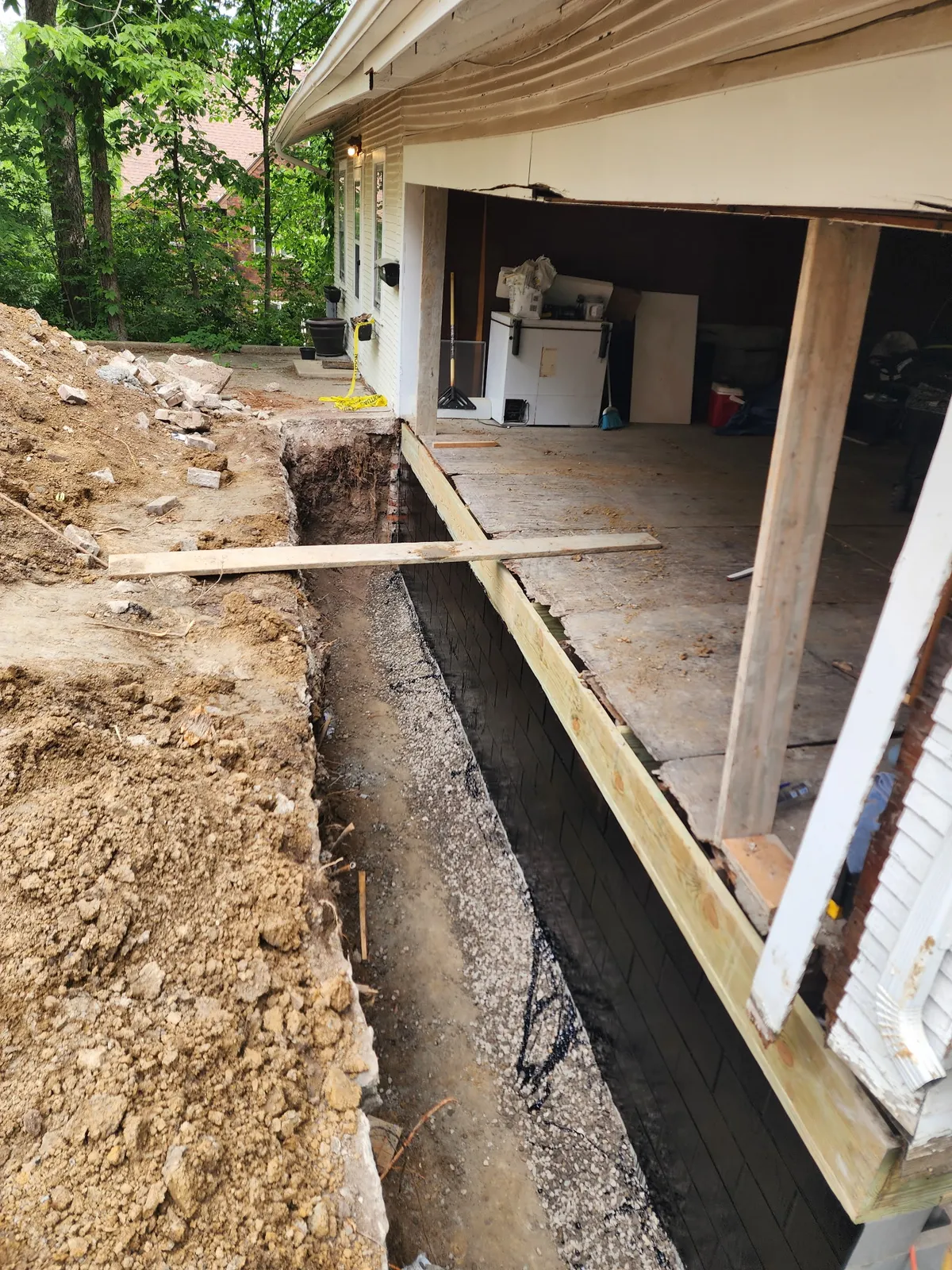
Foundation Repair in Ankeny, Iowa — Straight Answers About Your Bowing Basement Wall
Ankeny is almost entirely one kind of house: modern poured-concrete basements built since the 1990s on what used to be farm fields. That takes era and material off the table and points at the ground and the direction of the force. Here the force is sideways — the dense clay of the Des Moines Lobe swells hard in a wet spring and pushes against walls that are often less than twenty-five years old.

Get a precise analysis of your foundation and waterproofing situation, and a clear estimate on what any fixes or corrections might cost.
Takes 30 seconds. We'll call within 24 hours.
We'll be in touch within 24 hours.
Why are the poured basement walls in Prairie Trail and other post-2000 Ankeny homes bowing inward so soon?
Foundation repair in Ankeny looks different from the older metro because the housing is so uniform. Where Des Moines stacks stone, brick, and block across a century, Ankeny is overwhelmingly poured-concrete basements built from the 1990s onward, on former agricultural land out on the flat glacial shelf. When the material and the era barely vary, the interesting questions are about the ground and, more specifically, about which direction it is pushing. In Ankeny the answer is usually sideways, not down — and that is what makes a young house crack in a way its owners never expected.
The ground here is the Des Moines Lobe, and through Ankeny the clay in it is dense and expansive. It takes on water in a wet spring and swells, and it does that against whatever is in its way. For most Ankeny homes, what is in its way is a full-height poured basement wall backfilled with that same clay. A poured wall resists inward pressure well up to a point, but sustained swelling loads it across its whole height, and past a certain point the wall answers with a horizontal crack near mid-height and a visible bow when you sight along it from one corner. That is a lateral-pressure signature, and it means the wall is being pushed — not that the house is settling.
The speed of it surprises people, and the reason is the timing of how these neighborhoods were built. Rapid development meant lots were graded, walls poured, and yards backfilled quickly across whole subdivisions. Where the backfill against a wall is dense clay and the finished grade is nearly flat, spring water soaks in beside the wall and lingers rather than running off, so the clay right against the concrete stays wet and swollen through the loading season. A structurally sound wall can still be over-pushed simply because of what is packed against it and how the lot sheds water — which is why two identical Prairie Trail houses can behave differently.
There is a vertical exception worth naming, because not every Ankeny problem is a bowing wall. Some of the stock is slab-on-grade, which has no basement wall to bow; there the evidence shows up indoors as floor cracks, binding doors, or a gap opening where the baseboard meets the floor. And on lots that were cut and filled to level the old field, a poured wall over a soft fill pocket can settle vertically instead — a crack wider at the top, a floor out of level. Those are the minority here, but they get the opposite repair from a bowing wall, so the direction has to be established before anything is specified.
Sorting an Ankeny house by what it is actually showing:
| Ankeny situation | Typical construction | What shows | What is driving it | What the repair addresses |
|---|---|---|---|---|
| Post-1990 poured basement (Prairie Trail, DMACC area, and similar) | Poured concrete wall | Horizontal crack near mid-height; wall bowing inward | Dense Des Moines Lobe clay swelling against the wall in wet springs | Carbon-fiber straps, wall anchors, or bracing, with grading and drainage to cut the load |
| Slab-on-grade home | Slab | Floor cracks, doors binding, baseboard gaps | Differential support beneath the slab | Slab piers or targeted support where bearing was lost |
| Poured wall over a cut-and-fill pocket | Poured concrete wall | Vertical crack wider at the top; floor out of level | Fill under one part of the footing still consolidating | Push or helical piers to competent strata |
The repair follows the direction of the movement. A wall being pushed inward is a lateral problem and gets restrained: carbon-fiber straps hold a wall with slight, early bowing; wall anchors or steel bracing straighten and hold one that has moved further. Because the swelling clay is fed by water sitting against the wall, that restraint is paired with corrected grading and drainage so the clay right at the wall stops being re-saturated every spring — otherwise the pressure simply rebuilds. A wall that has settled vertically over a fill pocket is a bearing problem instead and gets piers carried to competent strata, push where the load is heavy enough to drive against and helical under lighter loads, both torque-monitored so capacity is measured on site rather than assumed. The specification detail for each is on the foundation repair page.
On cost, the honest framing for a mostly-lateral town is that restraint and piering price differently, so no single per-unit number describes an Ankeny job. A bowing wall is priced by the length needing straps, anchors, or bracing plus the drainage that keeps it dry; a settled corner tracks pier count, where typical market ranges put push piers around $1,250 to $2,500 each and helical roughly $1,800 to $3,000. Either way an exact figure needs an on-site estimate, because the wall has to be measured to know how far it has moved and why. JLB works the same Des Moines Lobe ground through Johnston, Bondurant, Polk City, and Des Moines, with I-35, Delaware Avenue, and Ankeny Boulevard keeping the north-metro service area tight. Because water sitting against the clay is the engine here, many Ankeny repairs are paired with drainage and waterproofing correction.
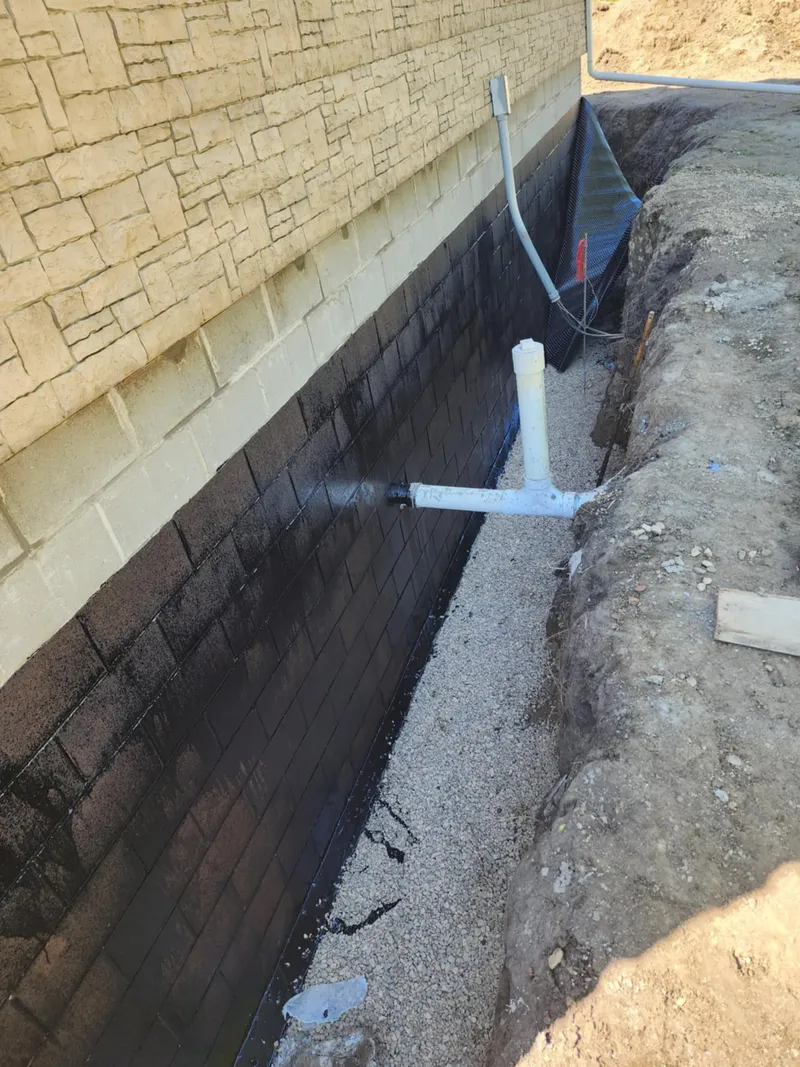
Meet the Team Serving Ankeny
JLB is a local crew — not a franchise. We handle foundation repair across Ankeny and the Des Moines metro. Watch to see who shows up at your door.
Watch Foundation Repair Work in Ankeny
Two Ways to Pay Over Time
12 Months Same As Cash
Pay the full balance within 12 months and you pay no interest.
5 Years at 6.99% APR
A lower monthly payment, spread over 60 months.
On approved credit. Ask for full terms at your free estimate.
Foundation and water problems rarely get cheaper while they wait.
What Foundation Problems Develop in Newer Ankeny Homes?
The warning signs and what each one means are on our foundation repair page.
Is your Ankeny home showing signs of foundation trouble?
The clay soil under your home doesn't rest — it swells when wet, shrinks when dry, and pushes against your walls year after year. A free estimate tells you exactly what's happening beneath your Ankeny home and what it takes to fix it.
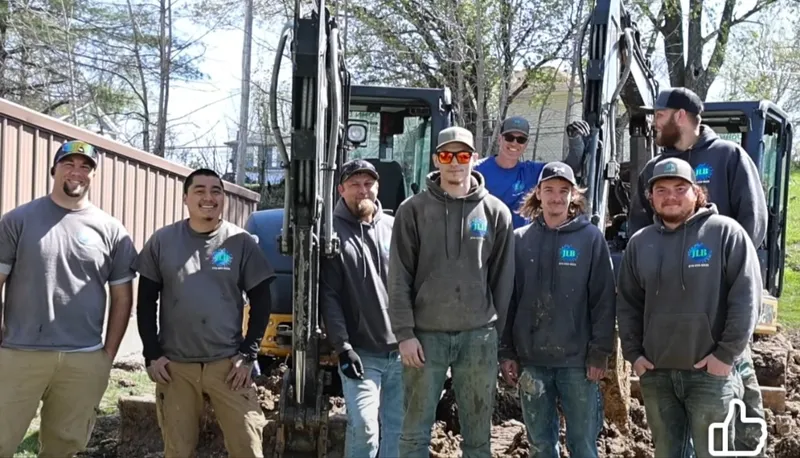
Who Handles Foundation Repair in Ankeny?
Ankeny is a community we know well. Our crews work throughout Polk County, and with around 81000 residents, we've seen the full range of foundation conditions here — from older homes in established neighborhoods to newer builds on the edges of town. Same team from inspection to completion, every time.
Call (515) 717-8560“We noticed the cracks getting worse every spring after the thaw. JLB came out, explained the soil issues specific to our area, and had piers installed in two days. No more movement since.”
Real Projects. Real Results.
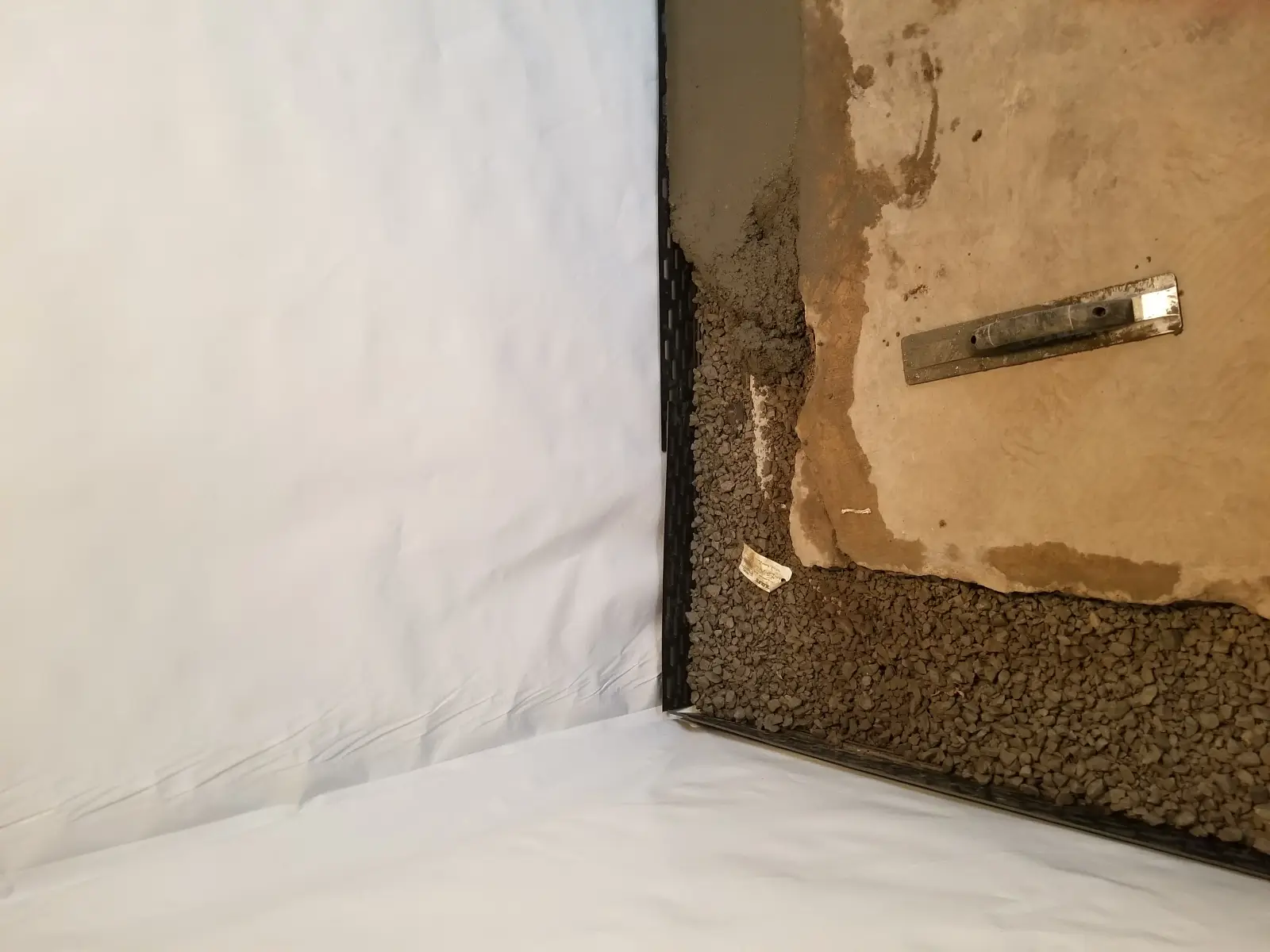
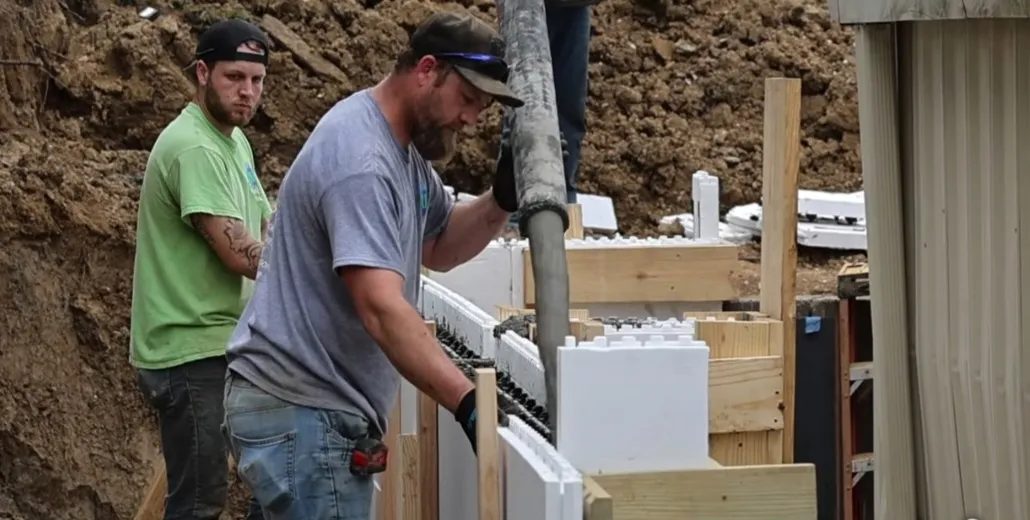
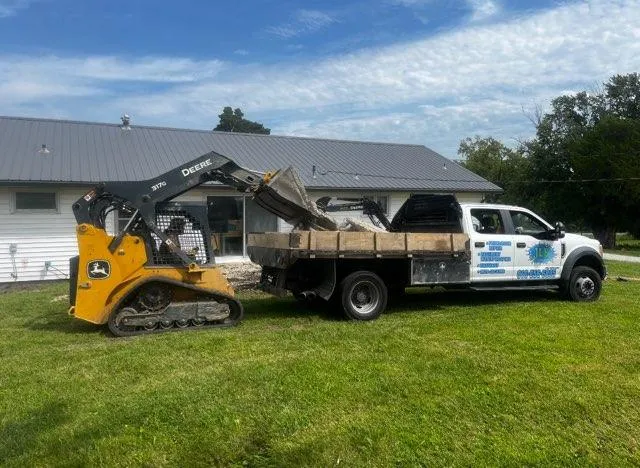
Every photo is from an actual JLB job site — not a stock photo. See the work we do every day across Kansas City and Des Moines.
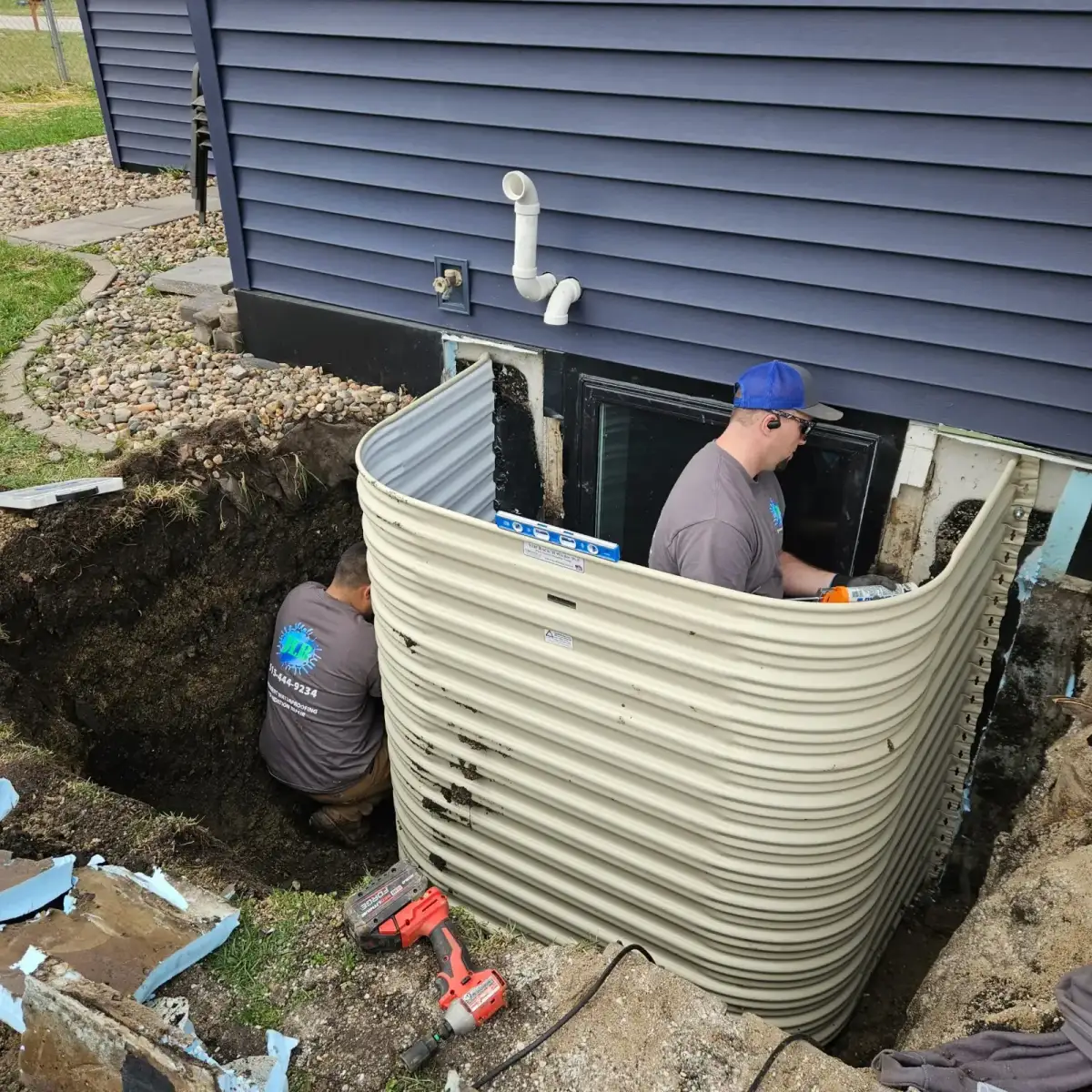
What Does Foundation Repair Cost in Ankeny, IA?
Slab foundations across Ankeny settle when Polk County's clay soil shrinks and creates voids. The number of piers needed — typically 6 to 12 for a settling home — is the biggest cost driver. Here are the Des Moines metro ranges for 2026.
| Repair Type | Typical Cost Range | Notes |
|---|---|---|
| Crack repair (epoxy/polyurethane injection) | $200–$700 per crack | Non-structural hairline cracks |
| Steel push piers | $900–$2,700 per pier | Permanent fix for settling foundations; most homes need 6–12 piers |
| Helical piers | $1,300–$3,100 per pier | Used when soil conditions require screwing into load-bearing strata |
| Wall anchors | $450–$900 per anchor | Stabilizes bowing basement walls; typically 4–8 per wall |
| Carbon fiber reinforcement | $250–$500 per strip | For minor to moderate wall bowing; less invasive than anchors |
| Minor foundation repair (total project) | $1,300–$4,500 | Small cracks, minor settling |
| Major foundation repair (total project) | $4,500–$13,000+ | Multiple piers, structural wall repair, significant settling |
| Structural engineer report | $250–$700 | Sometimes required before repair, sometimes included in estimate |
Des Moines metro pricing is typically 10–15% lower than Kansas City due to lower labor rates. Glacial till soil conditions may reduce the number of piers needed compared to KC's expansive clay. JLB provides free estimates — call (515) 717-8560 for an accurate quote.
Two Ways to Pay for It
12 Months Same As Cash
Pay the full balance within 12 months and you pay no interest.
Best if you can pay it off within a year.
5 Years at 6.99% APR
A lower monthly payment, spread over 60 months.
Best for bigger projects.
On approved credit. Ask for full terms at your free estimate.
Foundation and water problems rarely get cheaper while they wait.
Foundation Repair Questions From Ankeny Homeowners
Because in Ankeny the usual problem is sideways pressure, and age offers little protection against it. Your home sits on the dense, expansive clay of the Des Moines Lobe, which swells when it takes on water in a wet spring. That swelling pushes against the poured wall backfilled with the same clay, loading it across its whole height. A poured wall handles that pressure well up to a point, but sustained loading past that point produces a horizontal crack near mid-height and a wall that reads bowed when you sight down it. It is not the house settling — it is the wall being pushed — and that distinction matters because a bowing wall is straightened and held, not lifted.
The strength comes from the clay and the water, not from the age of the concrete. Ankeny's neighborhoods went up fast on former farmland, and in that speed the wall was often backfilled with the dense clay dug from the same hole and the yard graded nearly flat. Flat grade means spring water soaks in right beside the wall and sits there instead of draining away, so the clay against the concrete stays wet and swollen through the whole loading season. Year after year that repeated swelling works the wall inward. Two identical houses on the same street can differ simply because one sheds water away from the wall and the other holds it — which is why what is packed against the wall and how the lot drains matter as much as the house itself.
Bowing is the headline here, but it is not the only pattern. Some Ankeny homes are slab-on-grade, which has no basement wall to bow; on those the evidence appears indoors as a floor crack, a door that binds, or a baseboard pulling away from the floor. And where a lot was cut and filled to level the old field, a poured wall over a soft fill pocket can settle vertically — a crack wider at the top, a floor out of level across a span. Those are the minority in Ankeny, but they get the opposite repair from a bowing wall, so which one you have is established first by measuring the wall and the floor before any method is chosen.
By restraining it and then removing what is pushing on it. For a wall with slight, early bowing, carbon-fiber straps bonded to the inside face hold it against further movement. For a wall that has moved further, wall anchors or steel bracing can hold it and, in many cases, gradually straighten it back toward plumb. Neither of those lasts, though, if the swelling clay keeps getting re-saturated, so the restraint is paired with corrected grading and drainage that keeps spring water from pooling against the wall. The goal is a wall that is both held and no longer being pushed, which is why the water side is part of the repair rather than a separate upsell.
It depends entirely on whether the wall has already moved. If a wall is still in plane and you are catching a hairline crack early, correcting the grade and drainage to stop the clay against it from swelling can sometimes be the whole job. Once a wall is visibly bowed or has a working horizontal crack, drainage alone will not pull it back — the wall has to be restrained or straightened first, and then kept dry so the pressure does not simply rebuild. The order matters: hold the wall, then fix the water. Which of those your house needs is what an on-site look at the wall settles.
Because most Ankeny work is lateral rather than vertical, no single per-unit price describes a job. A bowing wall is priced by the length that needs carbon-fiber straps, anchors, or bracing, plus the drainage that keeps it from being re-loaded — a very different calculation from counting piers. Where a house has settled over a fill pocket instead, the number tracks pier count, and typical market ranges put push piers around $1,250 to $2,500 each with helical roughly $1,800 to $3,000. Either way an exact figure needs an on-site estimate, since the wall has to be measured to know how far it has moved. JLB's is a free 45-minute analysis with a written report you keep, including when the finding is that the wall is stable and only the drainage needs attention.
Not Sure What You're Dealing With?
Click any symptom below to learn what it means, what's likely causing it, and how we can help. Most of these are more common — and more fixable — than you'd think.
Diagonal, stair-step, or horizontal cracks in drywall, plaster, or brick usually trace back to soil movement beneath your foundation. The heavy clay soils in the Kansas City and Des Moines metros expand and contract seasonally, which can shift your foundation over time. The good news: this is very fixable with the right approach.
Water entering through floor joints, wall cracks, or seeping through porous concrete means groundwater pressure is pushing moisture into your basement. An interior drainage system and sump pump can solve this permanently — and we can usually have it done in a day or two.
When a foundation settles unevenly, it can shift your home's frame just enough to make doors and windows bind. This is one of the earlier signs of foundation movement — and catching it early often means a simpler, less expensive repair.
That musty smell is moisture. Up to 40% of the air in your home rises from below — from your crawlspace and basement. If there's excess humidity down there, it affects your whole home. Encapsulation seals it out, and you'll notice the difference in your air quality right away.
Floors that slope toward the center or an exterior wall usually mean the support structure underneath needs attention. Push piers can stabilize your foundation and often lift it back to level — giving your floors a second life.
Water collecting near your foundation means your grading or drainage isn't directing water away effectively. French drains, regrading, extended downspouts, and drain pipes can redirect water away from the house — protecting your foundation for the long haul.
A basement wall that has bowed more than 2 inches inward, shifted off its footing, or shows multiple structural cracks may have moved beyond what bracing can fix. When carbon fiber straps, I-beams, or wall anchors are not enough, the wall needs to be removed and rebuilt with reinforced concrete. This is the last resort — but it is the permanent fix when the wall itself is compromised.
Schedule Your Free Foundation Estimate in Ankeny
We'll check your foundation for cracks, settlement, and structural movement — then give you an honest assessment and clear pricing. No pressure, no scare tactics. Fill out the form or call us at(515) 717-8560.
Where Else Does JLB Provide Foundation Repair Near Ankeny?
Our Locations
We're always close enough to help — our crews are local to your area.
JLB Basement Waterproofing & Foundation Repair — Des Moines
97 Indiana Ave Suite #1Des Moines, IA, 50314(515) 717-8560 View on Google Maps
Stop the Damage. Get Answers Today.
A free estimate takes 45 minutes and tells you exactly what's going on under your house — and exactly what it takes to fix it.